Swedish Researchers Enhance Photosynthesis by Reengineering Rubisco Enzyme for Greater Efficiency

Addressing Nature’s Limitations
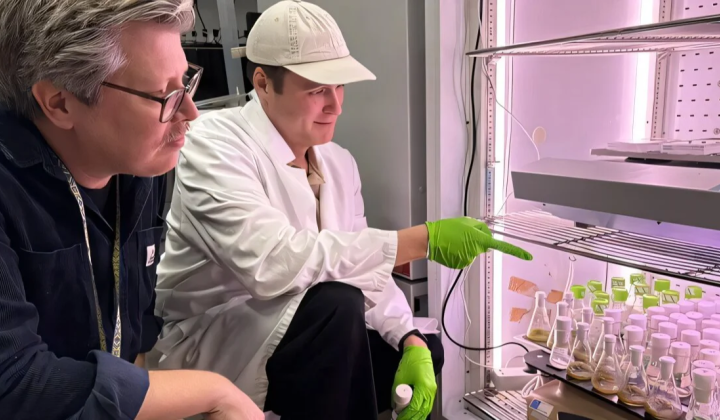
According to НВ — Техно: Scientists in Sweden have developed a method to accelerate photosynthesis by redesigning the Rubisco enzyme, a critical catalyst in the process that captures carbon dioxide and converts it into sugars and structural components essential for plant growth. Despite its importance, Rubisco operates relatively slowly and frequently mistakes oxygen for carbon dioxide, producing harmful byproducts and wasting energy as plants must process these toxic compounds.
Led by Professor Paul Hudson, the research team engineered and evaluated nearly 15,000 genetically modified variants of the enzyme. They focused on a bacterial form of Rubisco, which, while simpler and faster at capturing carbon dioxide, tends to make more errors. By employing innovative DNA tagging techniques, the scientists could monitor the performance of thousands of enzyme candidates simultaneously. Their efforts identified several promising versions that reduce oxygen-related mistakes while maintaining high carbon fixation rates.
Implications for Agriculture and the Environment
The most effective enzyme variants are now being introduced into plant cells. The findings of this extensive study were published in the journal Science Advances on October 24 at 22:37. This breakthrough holds significant potential to enhance photosynthetic efficiency in crops, which could positively impact agricultural productivity and environmental sustainability.
Improving technologies that optimize carbon dioxide utilization is a vital step toward combating climate change and ensuring global food security. If these redesigned Rubisco enzymes are successfully integrated into plants, they may lead to higher crop yields and reduce the environmental footprint of farming. This research marks an exciting advancement in biotechnology with promising applications in sustainable agriculture.
In addition to advancements in photosynthesis, the agricultural sector is seeing innovations in nutrient management. A recent study has introduced an affordable method for precise phosphorus measurement in soil, which promises to optimize fertilizer use and enhance crop efficiency. These complementary technologies could play a crucial role in increasing agricultural sustainability and productivity.

Read also