A Single Cable Exposes Buried Cracks Beneath Swiss Glaciers

Replacing Hundreds of Sensors With Just One Cable
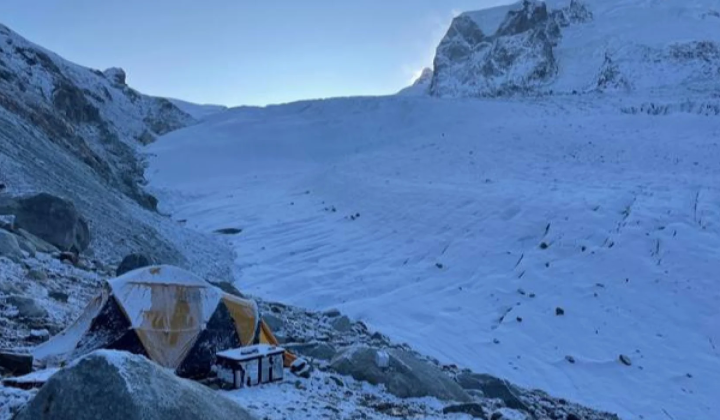
According to НВ — Техно: A Swiss research team led by Thomas Hudson at ETH Zurich has tested a new method for spotting hidden cracks in glaciers using a single fiber-optic cable, a setup that could make hundreds of individual seismometers unnecessary. Published in Science Advances on August 18, 2023, the study took place on the Gorner Glacier in the canton of Valais and was able to probe the internal structure of the ice at depths of up to 25 meters.
At the measurement site, concealed fractures accounted for more than 8% of the glacier's total ice volume. The cracks were either water-filled or air-filled, while the remaining 92% of ice remained intact. The technique relies on an interrogator connected to the cable: it sends a light pulse into the fiber and analyzes how the reflected light changes, giving researchers a detailed picture of the glacier's interior.
“One fiber-optic cable can do the work of hundreds of seismometers.”
Thomas Hudson
Such a tool could make hazard assessments for glacier collapses far more precise, especially after recent deadly events. For example, in July 2022, a section of the Marmolada glacier in the Dolomites collapsed, killing 11 climbers; in May 2025, the Birch glacier in Switzerland experienced a slide. These incidents underscore the growing need for reliable monitoring.
- collapse of part of the Marmolada glacier in the Dolomites in July 2022, which killed 11 climbers;
- slide of the Birch glacier in Switzerland in May 2025.
Beyond simplifying glacier surveillance, this innovation can reveal potential hazards linked to glacier dynamics. As climate change makes mountain regions more unpredictable, such research is vital for protecting people living in high-altitude areas. Adopting these new crack-detection capabilities could transform risk-management practices and the planning of environmental protection efforts.

Read also