How Jupiter and the Water Ice Line Shaped the Origin of Asteroid Bennu, According to Swiss Researchers

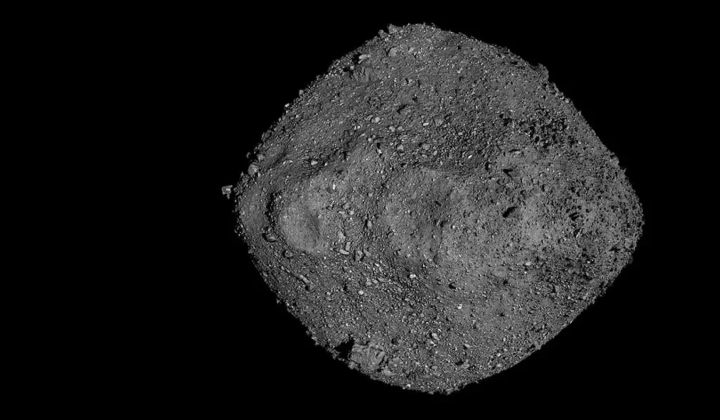
The Birth of Asteroid Bennu
According to НВ — Техно: Jupiter played a crucial role in the formation of Bennu, as revealed by Swiss scientists. Their study indicates that Bennu, a near-Earth asteroid, separated from a larger carbon-rich parent body between 700 million and 2 billion years ago. This asteroid approaches Earth roughly every six years. NASA’s OSIRIS-REx mission, launched in 2020, marked a major breakthrough in studying Bennu. The spacecraft touched down on Bennu’s surface, collecting samples that landed in Utah’s desert in September 2023. The capsule carried about 120 grams of material, with half a gram sent to a team in Zurich for detailed examination.
Insights from the Analysis and Its Broader Impact
Chemical analysis of the sample revealed that Bennu formed near the water ice line within the protoplanetary disk-the boundary where temperatures dropped enough for water vapor to freeze. Terrestrial planets formed closer to the Sun, where water remained gaseous. Jupiter, which emerged roughly one million years after the Sun's birth, influenced Bennu’s development by blocking larger dust particles while allowing smaller ones to reach Bennu’s formation zone.
This research challenges earlier assumptions that such asteroids originated in the distant outskirts of the Solar System. As scientist Maria Schönbächler explained,
“Bennu is a hybrid: its material does not clearly match either the inner or outer Solar System.”
She added,
“Bennu may offer the clearest glimpse into the primordial chemical mix from which the terrestrial planets eventually formed.”
The findings were published in Science Advances, underscoring their significance for understanding the Solar System’s formation.
The study of Bennu opens new avenues in astronomy and geology, providing key insights into planetary formation processes. Understanding Bennu’s composition and origin can shed light on how other celestial bodies in our Solar System formed and help identify potential resources for future space missions. These discoveries have implications not only for scientific knowledge but also for advancing technologies related to space exploration.
Understanding the origins of asteroids like Bennu is essential for piecing together the early history of our Solar System. In a related study, researchers from Yale have uncovered that the earliest solids in the Solar System were formed from hot chondrules rather than icy dust, challenging previous assumptions about planetary formation. This discovery complements the findings about Bennu, highlighting the complex processes that shaped celestial bodies. To learn more about these intriguing developments, read the full article on the origins of early Solar System materials.

Read also