American Researchers Explore Dentin Phosphophoryn with $1.2 Million Invested in Tooth Regeneration

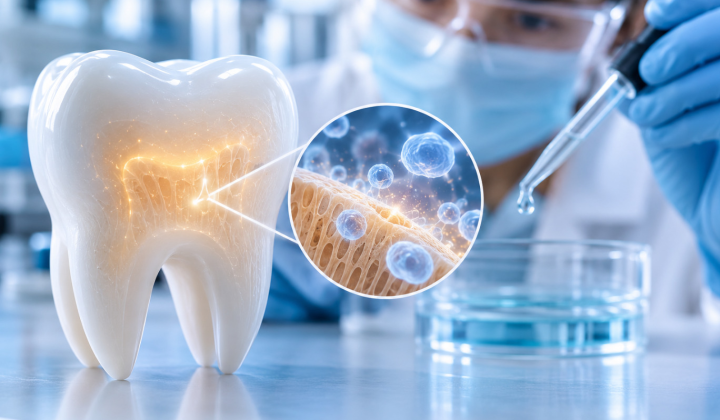
Scientists Work on Groundbreaking Technology to Enable Teeth to Heal Themselves
According to Radiotrek — Світ: A team of American researchers is investigating dentin phosphophoryn, a protein that could enable teeth to naturally repair damaged tissue. This project has secured $1.2 million in funding. Dentin phosphophoryn is found within the layer beneath tooth enamel and plays a crucial role in the formation of this part of the tooth by aiding mineral accumulation.
The study focuses on autophagy, the cell’s natural mechanism for clearing out damaged components. Scientists are examining the dental pulp - the soft interior containing nerves and blood vessels. Their work involves stem cells sourced from human teeth, potentially paving the way for innovative dental treatments. However, this approach is still in the research phase, and its safety and effectiveness have yet to be proven.
Although the findings hold promise for reducing the reliance on traditional fillings, it is too early to consider replacing current dental practices. This research could mark a significant advancement in dental science, but practical applications remain some distance away.
Future Implications of This Emerging Technology
Studying dentin phosphophoryn may lead to transformative progress in dentistry by introducing new methods for treating tooth damage. Should these efforts succeed, they might revolutionize how dental diseases are managed and decrease the need for conventional procedures like cavity fillings. Nevertheless, further investigations and clinical trials are essential to validate the technology’s safety and efficacy before it can be widely adopted.
For an English-speaking audience, it’s worth noting that regenerative dental therapies are a growing field aimed at improving oral health outcomes and patient comfort by harnessing the body’s natural healing abilities.
In addition to this research, advancements in dental science are also being made across the globe. For instance, a team from the UK has developed a gel that not only repairs tooth enamel but also combats cavities. This innovative approach highlights the ongoing efforts to enhance dental care and may complement the findings on regenerative methods for tooth restoration. As these technologies evolve, they could reshape the future of dental treatments.

Read also