How Russia's 2022 Air Dominance Shaped Ukraine's Early Counteroffensives

Russian Military Superiority in Aerial Reconnaissance
According to ХВИЛЯ: In an interview with political analyst Yuriy Romanenko, Ukrainian Armed Forces serviceman Illia Shpoliansky detailed the Russian army's overwhelming advantage in aerial reconnaissance during the initial phase of the full-scale invasion of Ukraine in 2022 and its impact on combat operations, particularly during the counteroffensive on the Kherson front. According to Shpoliansky, Russia's total air superiority in the war's first months resulted in significant losses for Ukrainian troops. This early phase of the conflict highlighted a critical technological gap that Ukraine has since worked to close.
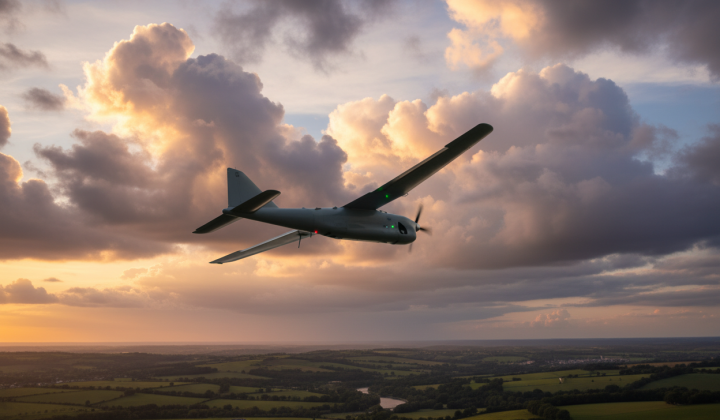
At the invasion's outset, Russian forces deployed 'Orlan' and 'Supercam' type drones, which severely complicated the situation for Ukrainian defenders. Shpoliansky noted that while the numbers of these drones were not yet vast, their persistent presence in the skies created serious difficulties for the Ukrainian army.
"We entered the war in 2022 with the enemy having total superiority in the air, in reconnaissance," - Illia Shpoliansky
He stated that 'they controlled the airspace. Consequently, they could direct artillery fire. And this was their total air dominance.' Shpoliansky also emphasized that Ukrainian forces were unprepared for this reality. 'Some were shot down, but there were significantly more of them than we could destroy. And they controlled the air,' he remarked. This led to 'colossal losses' and 'very significant failures' during offensive actions, specifically on the Kherson axis.
The Kherson Axis Counteroffensive
The counteroffensive on the Kherson front lasted throughout the summer, and Shpoliansky stated that the first major losses during the push were directly due to Russian air superiority. 'It made itself felt. And we suffered colossal losses because of it,' he observed. However, the situation has since evolved, and 'today, regarding aerial reconnaissance, in principle, it has not fundamentally changed for them.'
Shpoliansky stressed the importance of aerial reconnaissance, noting that 'for probably 10 years now, it has played a very significant role in such conflicts.' He also pointed out that, despite the situation remaining unchanged for the Russians in terms of aerial reconnaissance, the Ukrainian side has managed to gain some breathing room through the mass deployment of FPV interceptors and electronic warfare (EW) systems. This has allowed Ukrainian forces to reduce the enemy's aerial advantage, which in turn has influenced the course of combat.
The city of Kherson was liberated in the autumn, concluding the protracted counteroffensive.
The critical role of aerial reconnaissance in modern warfare, as highlighted by Shpoliansky, underscores the decisive impact of technology on military strategy. The shifting frontline situation, including Kherson's liberation, demonstrates the adaptation of Ukrainian forces to new conditions and their use of modern technologies to partially offset the enemy's advantage. This evolution points to the continued development of tactical approaches within the Ukrainian army under the pressures of war.
Understanding the implications of Russia's aerial dominance is crucial, especially when considering the broader context of the conflict. The reliance on long-range strikes has emerged as a significant threat to Ukraine's defense capabilities. To delve deeper into how these strategies have evolved and their impact on the battlefield, you can read more about the critical risks posed by Russia's long-range assaults.

Read also