Rare Bubo jalca Owl Discovered in the Andes, Identified Solely by Its Distinctive Call

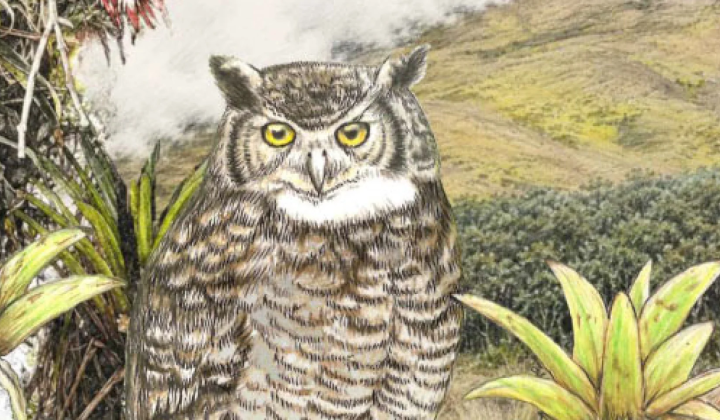
Discovery of the Elusive Jalca Horned Owl
According to НВ — Техно: A previously unknown species of eagle-owl, named the Jalca Horned Owl (Bubo jalca), has been discovered in the Andes. This exceptionally rare bird is distinguished exclusively by its unique vocalizations and inhabits cold, high-altitude grasslands and misty forests within the Huancabamba depression. The species was formally described based on a specimen collected in July 1980 near the settlement of Cruz Blanca at an elevation of approximately 3,050 meters.
The range of Bubo jalca forms a natural boundary between the northern paramo highlands and the southern puna regions. Although it resembles the Bubo nigrescens found in Ecuador and Colombia, the two species can be differentiated by their calls:
- The Jalca Horned Owl emits a sharp, brief "he-ku!" sound with emphasis on the first syllable.
- Bubo nigrescens produces a prolonged, three-syllable call "kus-kun-go," stressing the second syllable.
- The Magellanic Horned Owl (Bubo magellanicus) features a rapid "tu-ku" call in both sexes.
Bubo jalca is critically endangered, owing to its extremely limited habitat. Its survival is threatened by the replacement of native high-altitude grasslands with pine plantations and the logging of surrounding cloud forests. The preserved specimen of this owl is housed at the Museum of Natural Science at Louisiana State University, while recordings of its vocalizations are archived at the Macaulay Library of Cornell University's Ornithology Lab. Remarkably, this species has yet to be photographed in the wild and urgently requires conservation efforts to protect its dwindling population.
The Importance of This Finding
The identification of the Jalca Horned Owl highlights the critical need to preserve biodiversity in the Andes, where many avian habitats are increasingly threatened by human activity. Given its precarious status, immediate actions are essential to safeguard its environment and prevent extinction. This discovery also encourages further scientific exploration of the region's unique ecosystems and may aid in uncovering other rare species that remain undocumented.

Read also