Over 2,000-Year-Old Celtic Bronze Duck Unearthed in Czech Republic

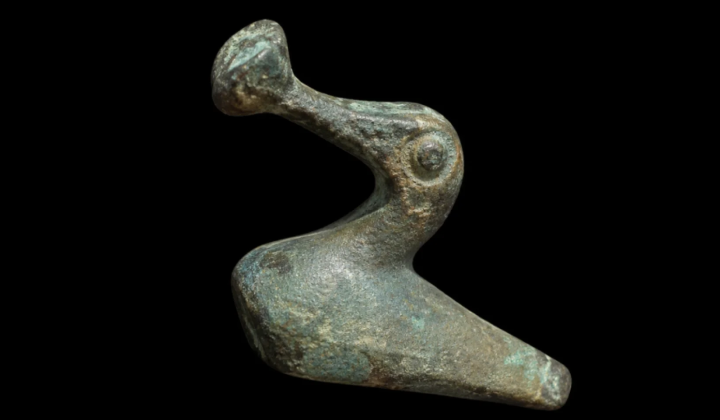
Tiny Bronze Duck Figurine Discovered in Czech Fields
According to НВ — Техно: A miniature bronze duck figurine, dating back more than two millennia, has been found in a field near the village of Tučín in the Czech Republic. The discovery was made by amateur archaeologist Miroslav Komínek. This artifact belongs to the La Tène culture, which corresponds to the Celtic Iron Age, and is believed to have been a decorative element linked to the Amber Road trade route.
Measuring just 23 millimeters in length and weighing less than 10 grams, the figurine was picked up from the field's surface without the use of a metal detector. Its features include rounded protruding eyes, an elongated beak, a teardrop-shaped body, and transverse grooves on the rear. According to archaeologist Zdeněk Šeněk, this piece ranks among the finest Celtic bronze animal figurines ever found in the Moravian Gate region near Přerov.
Cultural Significance of the Find
The La Tène culture flourished from roughly the 5th century BCE until the Roman expansion. Geographically, the discovery site lies in the Moravian Gate, a natural corridor between the Carpathian and Sudetes mountain ranges. This area also served as a key passage for one branch of the Amber Road. Similar finds-bronze animal figurines such as wild boars and waterfowl-have been uncovered from Poland through central Moravia and into Lower Austria.
Common motifs in Celtic art include:
- bronze boars
- ducks
- geese
- swans
- ravens
- deer
- rams
The figurine discovered by Miroslav Komínek holds substantial cultural and historical value, reflecting the artistic traditions of the Celts in the region. Collaboration with the Comenius Museum in Přerov will enable a detailed study of this artifact and its place within Celtic history.
This find highlights the importance of the Moravian Gate region as a cultural crossroads, where traces of Celtic civilization have been preserved. Studying such artifacts not only deepens our understanding of Celtic art but may also shed light on ancient trade routes and intercultural contacts. Further research into the figurine could reveal new insights into the lives and beliefs of the Celts in this area.
This recent discovery of a rare Roman treasure near London underscores the rich archaeological heritage of Europe. Similar to the Celtic bronze duck found in the Czech Republic, such artifacts reveal the intricate connections and cultural exchanges that occurred across the continent over two millennia ago.

Read also