Mechanical Resonators Power New Quantum Chip Developed in Zurich

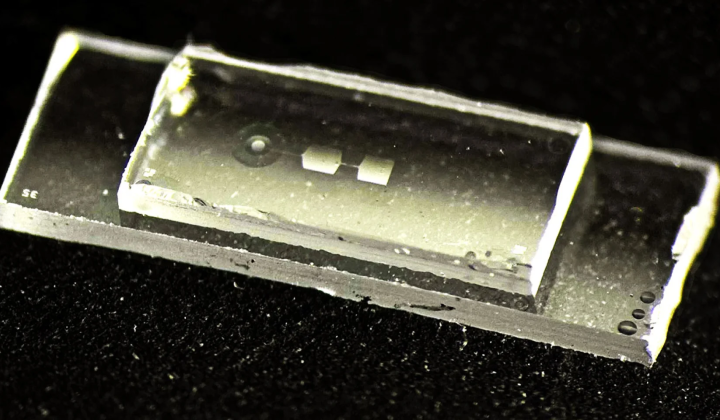
A Novel Quantum Chip Architecture from Zurich
According to НВ — Техно: Engineers in Zurich have built a quantum chip that uses tiny mechanical resonators to store information, breaking from conventional quantum memory designs. This device, measuring roughly 7.5 millimeters in length, separates computation from memory just like a classical digital computer. A superconducting qubit handles the processing, while quantum data is temporarily held within the mechanical resonators. Each vibration mode of these resonators functions as an independent memory cell.
Testing and Significance of the Breakthrough
The team validated the system using a quantum Fourier transform and a period-finding algorithm, both essential for running a wide range of quantum algorithms. Their findings were published in the journal Science.
'Our quantum chip contains tiny components that start vibrating when they store information,' explained Yvonne Chu, a professor of hybrid quantum systems at ETH Zurich.
She highlighted the technology's promise for advancing quantum computing.
'The quantum Fourier transform is a fundamental computational procedure needed for many quantum algorithms,' added Igor Kladarić, a doctoral student in Chu's group and co-author of the study.
This new design is seen as a major step toward improving both quantum computation and data storage within quantum systems.
By introducing a chip architecture that physically separates processing from memory using mechanical resonators, the Zurich team has opened up fresh possibilities for making quantum computers more efficient and scalable. Such improvements could drive the development of new algorithms and applications in fields including:
- cryptography
- materials science
- artificial intelligence
The study's results underscore the value of cross-disciplinary approaches in science and engineering, which can accelerate progress in quantum computing.
In a related advancement, researchers at Harvard have developed a groundbreaking chip capable of synthesizing DNA without the need for solvents. This innovation not only enhances the efficiency of DNA production but also aligns with the ongoing trend of integrating novel materials into quantum technologies. Discover how these advancements could reshape various scientific fields by exploring more about this solvent-free DNA synthesis technology.

Read also