Two 12th-Century Bronze Statues of Nataraja and Goddess Sivakami Discovered in India

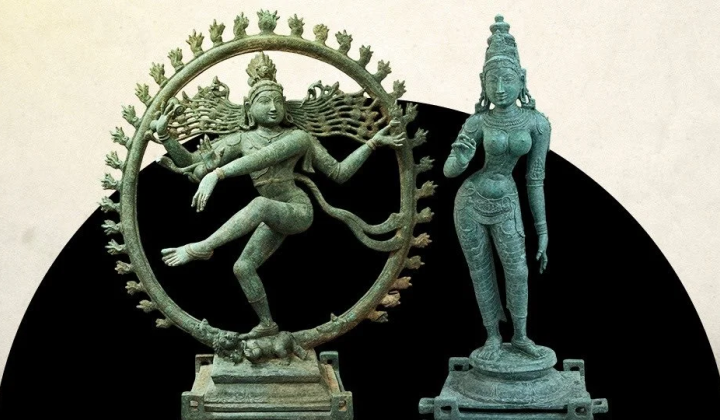
Bronze Statues Unearthed in Nagapattinam
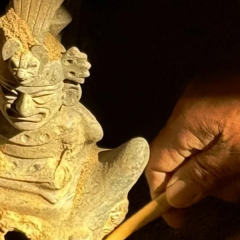
According to НВ — Техно: Archaeologists conducting excavations in Nagapattinam, a city in Tamil Nadu, India, have uncovered two remarkable bronze statues of Hindu deities dating back to the 12th century during the Chola dynasty. Announced by Minister Rajmohan Arumugam, the finds include a statue of Nataraja, depicting Shiva as the cosmic dancer, and a figure of the goddess Sivakami Amman. Both sculptures are recognized for their exceptional artistic significance and are currently preserved for detailed study.
The excavation on November 1, 2026, revealed these statues at a depth of approximately one meter, along with their pedestals. The Nataraja statue measures 110 cm in height and 100 cm in width, portraying the four-armed god performing the Ananda Tandava dance. Notably, one of his feet rests on a figure representing Apasmara, the demon of ignorance. The second statue, representing Sivakami, stands 82 cm tall and 23 cm wide, crafted in the elegant tribhanga pose. During the Chola period, bronze sculptures like these were commonly used in religious processions.
Expert Insights and Historical Context
Professor K. Rajan suggested that these statues might have been deliberately buried to protect them, while Professor V. Selvakumar speculated they were hidden during times of invasion. Historically, Nagapattinam held strategic importance as a major port on the Bay of Bengal during the Chola era. The city is also notable for a Buddhist monastery established in the early 11th century by the Srivijaya ruler, supported by King Rajaraja I. The surrounding region has yielded hundreds of Buddhist bronze sculptures, highlighting its rich cultural tapestry.
The statues have been transported to Chennai for chemical conservation treatments. Although their age was initially determined through stylistic and craftsmanship analysis rather than laboratory testing, plans are underway to conduct metallurgical examinations to gain further insights. As Minister Rajmohan Arumugam stated,
“The figures represent Nataraja, the dancing form of Shiva, and the goddess Sivakami Amman.”
These discoveries emphasize the cultural heritage and historical importance of the region.
The unearthing of these bronze statues in Nagapattinam marks a significant milestone for Indian archaeology and cultural preservation. They reaffirm the region's pivotal role in the Chola dynasty’s history and its influence on the development of religious art and rituals. Ongoing research and conservation efforts promise to shed new light on the artistic techniques and aesthetic traditions of the era, offering valuable perspectives on the evolution of Indian culture.

Read also