Transportation collapse continues in Kyiv due to alerts: authorities unable to cope

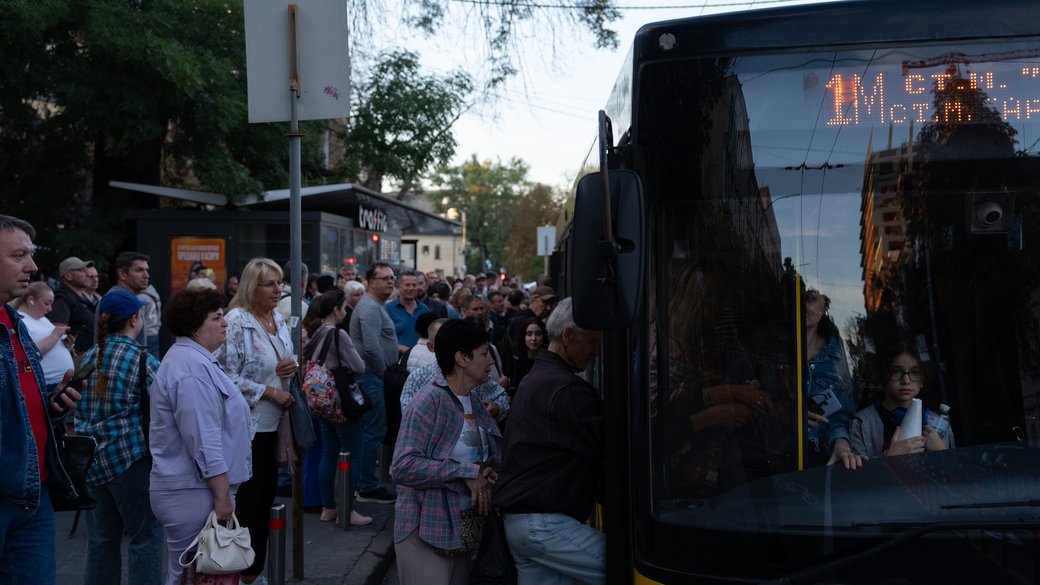
In Kyiv, prolonged air alerts have complicated transportation between the banks of the Dnipro River. When the open sections of the metro do not carry passengers, people are forced to wait for hours for ground transport. Partially, the problem is being addressed by a temporary bus No. 1-M, however, during peak hours it is overcrowded. This is reported by Suspilne Kyiv.
How Kyiv residents reach the left bank during alerts
During an air alert, 'Arsenalna' becomes the terminus for trains on the red Svyatoshyn-Brovarsky line. Passengers who need to get to the left bank have to wait for the all-clear or transfer to ground transport.
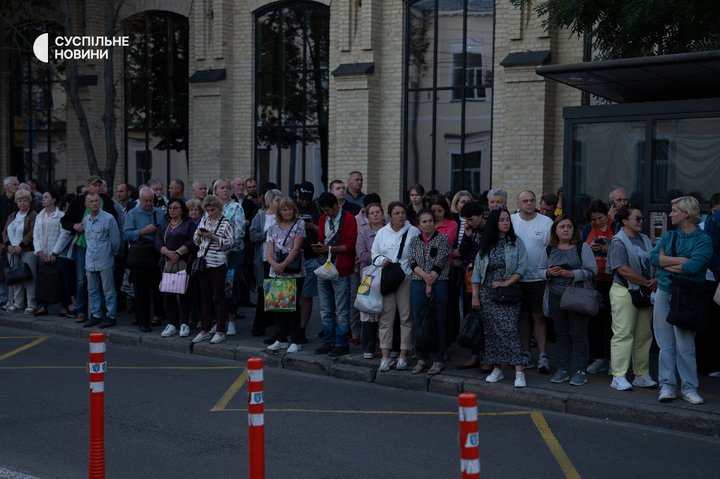
On the 'Arsenalna' platform, there was no significant crowding observed on September 8. Instead, queues formed at ground transport stops.
One of the main alternative routes has become bus No. 1-M between 'Palace of Sports' and 'Lisova'. According to a correspondent from Suspilne, passengers waited for it for about 20 minutes, but overcrowded buses sometimes passed stops without stopping.
'I was at work in a shelter, but to get to my destination, I left earlier. We already missed one bus No. 1-M that passed by without stopping. Now we are waiting to see what happens next,' said one passenger.
Some people are trying to reroute and travel with multiple transfers. Taxis remain an alternative, but due to high demand during alerts, trip costs can significantly increase. The capital is already discussing the possibility of limiting taxi fares during such periods.
How the Kyiv metro service will change starting September 10
The situation is expected to partially change starting September 10. Under a yellow level of air threat, the green Syrets-Pechersk line will operate without restrictions. Trains will be able to transport passengers across the Southern Bridge between the right and left banks.
Under a red level of threat, the green line will be split into two parts: 'Syrets' - 'Vydubychi' and 'Slavutych' - 'Chervonyi Khutir'. The red line will continue to operate only on the underground section between 'Akademmistechko' and 'Arsenalna' during danger.
The new regime is expected to reduce the load on buses and decrease crowding at stops. For passengers, this is particularly important during long alerts when the usual connection between the two banks of the capital is effectively disrupted.
Let’s remind that on September 9, the capital began to test the movement of the green line under the new regime before the planned changes.

Read also