Fines of Up to 170,000 Hryvnia Proposed for Russian Music in Ukraine's Parliament


New Language Requirement Bills in Ukraine
According to ХВИЛЯ: Two fresh legislative initiatives have been registered in Ukraine's Verkhovna Rada, targeting stricter language regulations. Designated as bills No. 15412 and No. 15430, these proposals introduce monetary penalties for breaches of language law-especially regarding Russian music-and broaden the roster of positions that demand certified knowledge of the state language. Both bills have now been forwarded for committee deliberation.
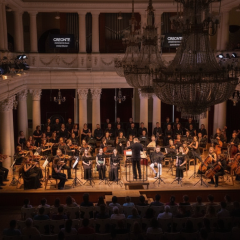
According to the details of bill No. 15412, filed on July 15, 2026, first-time violations of language rules would incur fines ranging from 6,800 to 17,000 hryvnia. If a repeat offense occurs within a year, the penalty jumps to between 20,400 and 25,500 hryvnia, imposed without any prior warning. Meanwhile, bill No. 15430 sets fines as high as 170,000 hryvnia for performing Russian music in public venues.
Expanded List of Positions and New Provisions
Additionally, the new legislation extends the list of roles that require a language proficiency certificate. This now includes:
- heads of state-run scientific institutions
- cultural facility directors
- auditors
- private enforcement officers
- insolvency practitioners (arbitration managers)
Children's camps and hobby groups are also mandated to provide a Ukrainian-only language environment.
The Commissioner for the Protection of the State Language operates solely based on citizen complaints, not by patrolling public areas. In other words, under these new rules, no Pension Fund employee can deny services based on the language a person uses to communicate. Fines for loud music in courtyards-regardless of the language of the music-would be set at 85 to 255 hryvnia for a first offense, and up to 510 hryvnia for a repeat violation.
'The public sphere is when someone does something for others in exchange for money or because of their position: selling, healing, teaching, serving, advertising, running an institution, or hosting an event.' - Iryna Polyakova
It is also important to note that the language law contains no provision linking language skills to eligibility for pensions, subsidies, social benefits, or medical assistance. 'The language law does not contain a single line connecting language knowledge to the right to a pension, subsidy, social or medical aid,' Polyakova added.
Regarding public space, she clarified that your TV, phone, headphones, and even your own yard are not considered part of it. 'Your TV, your phone, your headphones, and your yard are not regarded as public space,' she stated. Commenting on loud music issues, Polyakova noted that if silence is disturbed at night, authorities will respond regardless of what music is being played. 'If someone blasts music at two in the morning under the windows of an apartment building, the police will show up the same way-whether it's Russian pop, Beethoven, or even the Ukrainian national anthem,' she emphasized.
These proposed language requirements aim to tighten enforcement of linguistic norms in public spaces and workplaces, which could substantially shape the country's cultural policy. Ukraine continues to strengthen its language laws as part of broader efforts to promote Ukrainian identity amid the ongoing war with Russia. The changes are likely to spark public debate on language issues and drive further evolution of Ukraine's language policy, particularly in the context of protecting Ukrainian language and culture in a globalized world.

Read also