Three Robots Collaborate to 3D Print Steel Nuclear Reactor Vessel in the U.S.

Showcasing Cutting-Edge 3D Printing Technology
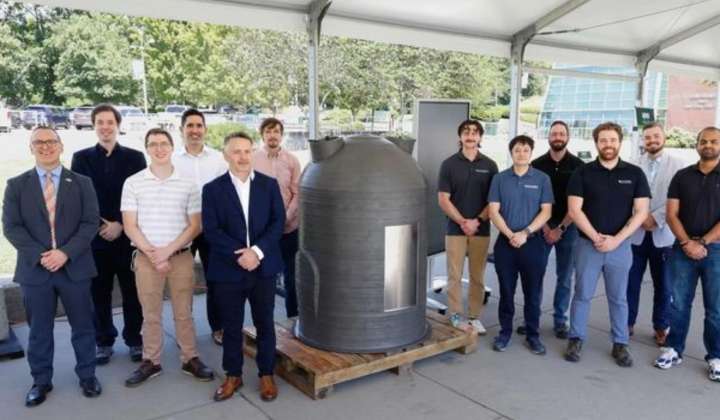
According to НВ — Техно: On September 10 at 12:02 PM, the Oak Ridge National Laboratory (ORNL) in the United States unveiled an advanced 3D printing technique that enabled researchers to fabricate a steel vessel for a nuclear reactor. Measuring approximately 0.9 meters in height and 1.5 meters in length, this reactor vessel was produced using a trio of MedUSA robotic arms. The process involves layer-by-layer deposition of molten metal, allowing the creation of complex dome-shaped structures that traditional manufacturing struggles to achieve.
This breakthrough was presented during the Materials and Manufacturing Innovation Days event, which gathered over 350 professionals from industry, energy, technology, and government sectors. The new approach offers a promising alternative to conventional methods that rely heavily on massive metal forgings and welding. Currently, the U.S. faces limitations in producing large-scale components, resulting in lengthy lead times for critical parts.
Protective Components and Certification Efforts
In addition to the reactor vessel, ORNL collaborated with the University of Maine to produce a large protective shield for spent nuclear fuel containers. Made from fiberglass-reinforced polymer, this shield is designed to safeguard containers during transportation and could potentially replace traditional wooden supports.
Despite advancements in 3D printing, certifying printed parts for use in actual nuclear equipment remains a challenge. To address this, ORNL has teamed up with Idaho National Laboratory to develop standardized digital inspection methods. Their strategy includes deploying real-time sensors, machine learning, and defect detection algorithms during the printing process. The goal is to reduce certification timelines for 3D-printed components in the nuclear and energy sectors from several years down to mere months.
“Our laboratory aims to integrate the needs of manufacturers and supply chains early in the research phase. This approach will accelerate the transition from lab innovations to industrial-scale production,” stated Ryan Dehoff.
Advances in 3D printing technology have the potential to revolutionize how nuclear industry components are produced, significantly shortening delivery times and cutting costs. Employing robotic manipulators for constructing complex geometries paves the way for innovations that could extend beyond nuclear energy into various other industrial applications.
As advancements in 3D printing technology continue to reshape the manufacturing landscape, the potential for cost-effective production methods is becoming increasingly relevant. For instance, recent developments in 3D printing techniques for NASA's rocket materials highlight how artificial intelligence is playing a significant role in optimizing these processes. Understanding these innovations can provide valuable insights into the future of large-scale component manufacturing.

Read also