Swiss Rail Corridor Becomes Test Site for First-Ever Panels Mounted Between Tracks

Corridors of Tomorrow
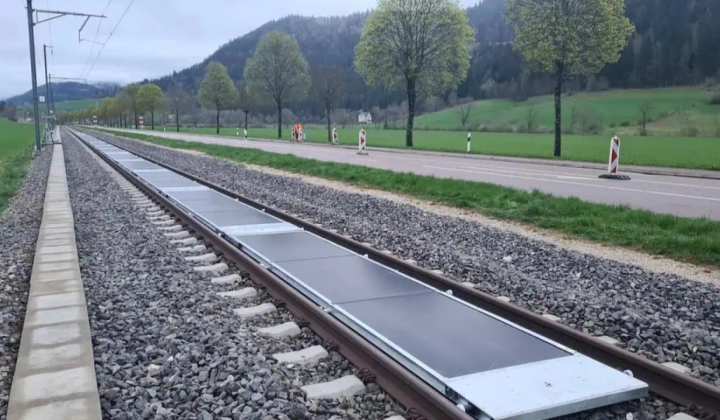
According to НВ — Техно: Switzerland has become the testing ground for a new renewable-energy concept: solar panels fitted directly between railway rails. The country's startup Sun-Ways has switched on the world's first installation of its kind, with 48 removable photovoltaic modules placed along 100 meters of actively used track. Together, these units generate 18 kW of power.
A custom train built by Scheuchzer can install the meter-long panels between the rails at a pace of up to 1,000 square meters per day. The demonstration is scheduled to run for three years, during which France's national rail operator SNCF will examine the data to decide whether to adopt the system on its own network.
Promise and Pitfalls
Electricity produced by the panels can be routed into the local power grid, used to run switches and signals, or sent straight into the catenary system to help move trains. Earlier plans were rejected by Switzerland's Federal Transport Office over worries about fire risk, glare, and vibrations. In response, the developers toughened the glass and applied an anti-reflective coating, clearing the way for the trial to move forward.
"Never before have solar panels been laid directly on railway track and operated under passing trains. Our long-term goal is to use this energy to drive locomotives, making them almost fully self-sufficient."
Joseph Scuderi, head of Sun-Ways
Rail networks occupy vast land areas, which makes them increasingly attractive for energy projects that avoid competing with agriculture. If the approach proves successful, rolling it out across 5,000 kilometers of Swiss rail could produce 1 TWh annually-roughly 2 percent of national electricity demand-without claiming any farmland.
This initiative points to a broader shift toward renewable power in transport infrastructure. Should the technology work at scale, other countries may follow, helping cut carbon emissions and strengthen energy independence in the railway sector.

Read also