A lizard from Thailand has been named for Syrax, the dragon in 'House of the Dragon'.

A 'little dragon': new lizard species found in Thailand's upland forests
According to НВ — Техно: Published: August 11, 09:02
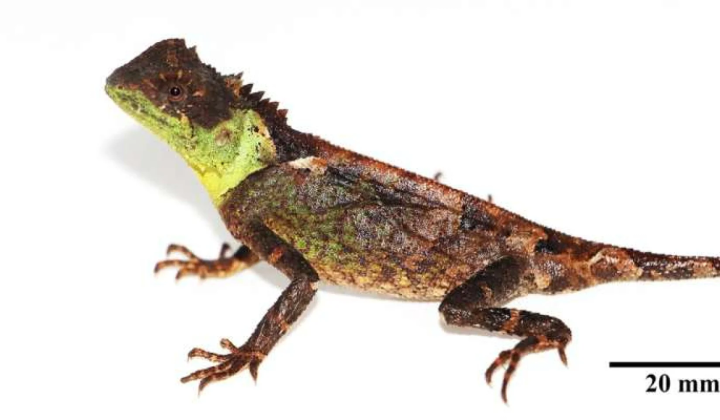
Researchers have formally identified a new agamid lizard, Acanthosaura syrax, from the highland forests of Thailand. The name references Syrax, the dragon ridden by Queen Rhaenyra Targaryen in the TV series House of the Dragon. The species was discovered in the evergreen forests of Mae Wong National Park, at elevations above 1,300 meters (4,300 feet), in the Tak-Kamphaeng Phet area.
With this addition, the Acanthosaura genus now comprises 23 known species. The research team, led by Poramad Trivalairat, carried out DNA analysis to confirm that the new lizard is genetically distinct from its closest relative, A. lepidogaster. A. syrax has a yellowish-green color, is among the smallest members of the genus, and lacks the black patch around the eye seen in several related species. It also carries a distinctive dark mark on its collar.
Another notable trait is its unusually large egg clutches for its body size, and it has the smallest scales on the neck and dorsal crest of all Acanthosaura species. Researchers believe the lizard may live only in a narrow band of high-altitude forest. In that same habitat, one can find species such as the Asian forest tortoise, Oldham's leaf turtle, and the Indochinese tiger.
The scientists are calling for better protection of Mae Wong's highland forests to safeguard the unique ecosystems where the new species lives. Earlier, scientists reported another pop-culture-named species: Cnemaspis vangoghi, named after Vincent van Gogh and described in the journal ZooKeys, was found in April 2022 in Tamil Nadu, India.
The discovery of Acanthosaura syrax highlights how much remains to be learned about biodiversity in Thailand's mountain forests and points to the urgent need to preserve natural habitats increasingly affected by climate change and human activity. As exploration continues, finds like this reinforce the importance of protecting places like Mae Wong National Park's high-elevation forests for the species that call them home.

Read also