3200-Year-Old Fragment of the Kadesh Peace Treaty Unearthed in Turkey

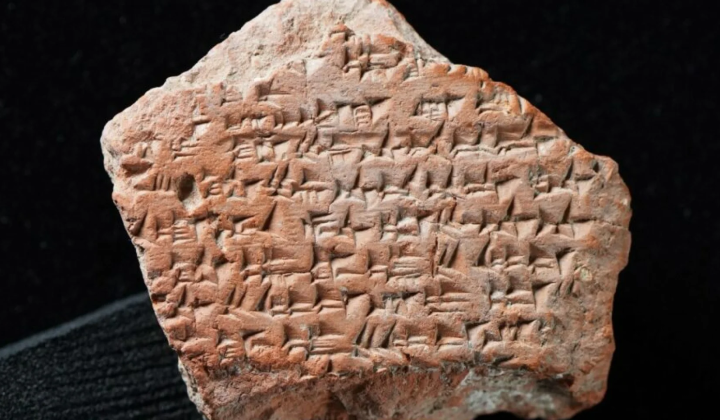
Discovery of a 3200-Year-Old Kadesh Peace Treaty Fragment
According to НВ — Техно: A remarkable archaeological find has emerged from the ancient Hittite capital of Hattusa, located in modern-day Turkey. Researchers uncovered a 3200-year-old piece of the Kadesh Peace Treaty, originally established between Hittite King Hattusili III and Egyptian Pharaoh Ramses II. This treaty includes provisions concerning the treatment of fugitives crossing between the Egyptian and Hittite empires. The discovery was announced on September 21, 2026, coinciding with the International Day of Peace, highlighting its significance for the history of diplomacy.
The fragment was found at Büyük Kale, the royal citadel of Hattusa in Turkey’s Çorum province. Dating back to approximately 1259 BCE, this treaty is among the most important diplomatic documents from antiquity. The preserved text corresponds to articles 12 through 20 of the treaty, which outline mutual obligations to return escaped individuals and prohibit punishment of those returned, along with their families.
- Reciprocal duties to return fugitives;
- Prohibition of penalties against returned persons and their relatives.
Turkey’s Minister of Culture and Tourism, Mehmet Nuri Ersoy, revealed that experts spent nearly a year analyzing the inscriptions before confirming their connection to the Kadesh Treaty. The tablet fragment was uncovered near Building E in Büyük Kale, an area linked to the Hittite royal palace. While the original treaty was recorded on silver tablets that have not survived, copies remain preserved as Egyptian hieroglyphic inscriptions on temple walls and Akkadian cuneiform tablets discovered in Hattusa.
Historical Background and Significance
The Battle of Kadesh, fought around 1274 BCE between Ramses II’s Egyptian forces and the Hittite army led by King Muwatalli II, set the stage for this landmark peace agreement roughly 15 years later. Initial fragments of clay tablets containing the treaty were first excavated in Hattusa during archaeological digs between 1906 and 1912. Additionally, the earliest excavations of a large storage complex in Hattusa date back to around 1800–1750 BCE.
This storage complex, featuring 16 large jars arranged on hillside terraces, dates to the Middle Bronze Age-prior to Hattusa’s rise as the political heart of the Hittite state. The preserved portions of the Kadesh Treaty are now safeguarded in Istanbul Archaeological Museums, the Museum of Anatolian Civilizations in Ankara, and the Berlin Museum of the Ancient Near East.
This discovery offers valuable insight into ancient diplomacy and international relations, as the Kadesh Peace Treaty is regarded as the earliest known formal peace agreement in history.
The treaty’s terms reflect a commitment to peaceful coexistence between two major powers of the ancient world, enriching our understanding not only of the Hittite Empire but also of ancient Egypt’s diplomatic history.

Read also