Scientists Uncover a Third Magnetic State with Major Implications for Quantum Tech

Shaping the Future of Quantum Technologies
According to НВ — Техно: Researchers at the U.S. National Accelerator Laboratory SLAC have provided definitive proof of a previously unknown form of magnetism called altermagnetism. This breakthrough, detailed in the journal Science, centers on manganese telluride (MnTe) and promises to significantly influence advancements in quantum computing and data storage technologies. Altermagnetism uniquely blends characteristics of both ferromagnets and antiferromagnets, offering new pathways for spintronics and high-efficiency data transmission devices.
Expanding the Magnetic Landscape
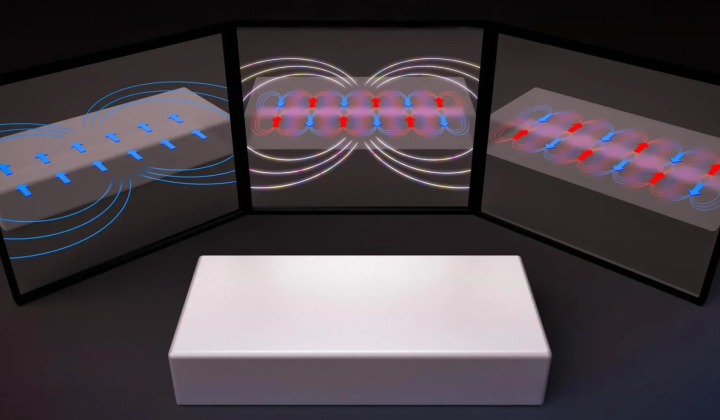
For nearly 90 years, magnets were categorized strictly as either ferromagnetic or antiferromagnetic. Ferromagnets respond readily to external magnetic fields, while antiferromagnets produce almost no external magnetic signal, making them difficult to detect. Altermagnets combine the opposing electron spin orientations found in antiferromagnets with a distinctive crystal structure capable of generating spin-polarized currents. This fusion harnesses the advantages of both types, opening fresh avenues for research and application.
Using advanced X-ray techniques at the European Synchrotron Radiation Facility (ESRF), scientists observed asymmetry and chirality within MnTe’s internal structure, confirming altermagnetism’s existence. This discovery lays critical groundwork for the field of spintronics, which exploits electron spin rather than charge. The potential applications include ultra-fast, interference-resistant devices, energy-efficient data centers, and next-generation computer memory systems. Future efforts aim to control altermagnetic states through light and electricity, paving the way for innovative quantum technologies.
The identification of altermagnetism marks a pivotal advancement in quantum technology, with the potential to transform data storage and processing methodologies.
Integrating these novel magnetic properties into spintronic devices could lead to more powerful and efficient computing systems capable of faster data handling with reduced energy consumption. Beyond computing, this finding may also impact material science and electronics, inspiring new technological applications across multiple disciplines.
As researchers delve deeper into the complexities of magnetism, the recent findings on altermagnetism not only enhance our understanding of magnetic materials but also resonate with advancements in related fields. For instance, the real-time observation of magnetic skyrmions showcases another innovative approach that could drive the evolution of brain-inspired computing, highlighting the interconnected nature of these scientific breakthroughs.

Read also