Six Russian Oil Refineries Shut Down by Ukrainian Drone Strikes in Just 20 Days

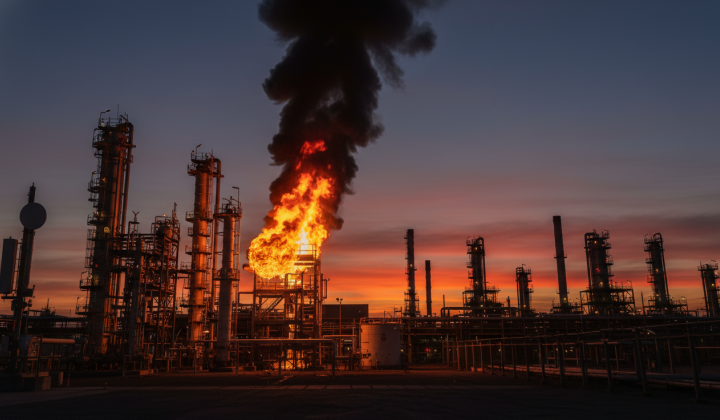
Strikes Targeting Russian Oil Refineries
According to ХВИЛЯ: On May 20, Commander Robert Brovdi of the Ukrainian Armed Forces' Unmanned Systems Forces reported that attacks had been carried out on 10 of Russia's largest oil refineries during the first 20 days of May. Six of those facilities have been forced to halt operations. Ukraine's General Staff confirmed damage to the AVT-6 primary oil processing unit at a refinery in the Nizhny Novgorod region, as well as destroyed storage tanks at the Yaroslavl-3 station. These strikes are part of a broader Ukrainian campaign to disrupt Russian energy infrastructure and reduce fuel supplies for the Russian military.
In his statement, Brovdi noted:
'In the first 20 days of the month, Ukrainian Birds, together with other deep-strike units, hit 10 of the largest Russian oil refineries. Six of them are currently not operating.' - Robert Brovdi
Among the refineries now offline, he listed:
- Moscow
- Ryazan
- Perm
- Kirishi
- part of the capacity in Samara
- Tuapse, which has been indefinitely shut down
During May, refineries in Primorsk and Yaroslavl were also temporarily halted. The timeline of attacks is as follows:
- May 1 - Tuapse refinery
- May 3 - Transneft oil terminal at Primorsk port
- May 4 - Kuibyshev refinery
- May 5 - Kirishi refinery
- May 7 - Lukoil-Permnefteorgsintez
- May 8 - Yaroslavl refinery
- May 13 - Tamanneftegaz oil terminal
- May 15 - Ryazan refinery
- May 17 - Moscow refinery
- May 18 and 20 - Lukoil-Nizhegorodnefteorgsintez
Recent Strikes and Their Impact
In just the past 24 hours, seven oil pumping stations (OPS) and one linear production dispatch station in Russia's Nizhny Novgorod, Ryazan, and Yaroslavl regions were hit. Brovdi confirmed:
'In the last day alone, seven oil pumping stations (OPS) and one linear production dispatch station in the Nizhny Novgorod, Ryazan, and Yaroslavl regions of the Russian Federation came under attack.' - Robert Brovdi
On the night of May 20, according to the Ukrainian General Staff, the AVT-6 unit at Lukoil-Nizhegorodorgsintez near Kstovo was struck, and at the Yaroslavl-3 OPS in Semibratovo, four storage tanks with a total capacity of 140,000 cubic meters were damaged. That same day, Ukrainian forces also targeted enemy command posts in Soledar, observation posts near Lyubimovka and Ivanivske, and concentrations of personnel in Novoukrainka, Myrne, Snizhne, and Donetsk. Additionally, an ammunition depot near Marynivka and a repair unit in Sievierodonetsk were hit.
These actions demonstrate that Ukrainian forces continue to actively strike critical Russian infrastructure, particularly oil refineries, underscoring their ability to conduct deep strikes against strategic targets. The ongoing attacks on oil refineries highlight Ukraine's strategy to destabilize Russia's resource base, potentially affecting fuel supplies and the aggressor country's economic stability. With the frequency of assaults on key infrastructure increasing, further escalation of the conflict and tactical adjustments by both sides are likely in response to these operations.
The recent escalation in drone strikes has not only targeted oil refineries but also extended to other critical infrastructure. For instance, Ukrainian forces have recently struck an oil refinery in the Urals and various facilities in Grozny, further showcasing the strategic approach of these operations. To understand the broader implications of these attacks on Russia's energy capabilities, explore the details of these significant strikes and their potential impact on the ongoing conflict.

Read also