20 Onboarding Examples Every HR Team Can Learn From, According to AIHR

What the Onboarding Process Looks Like
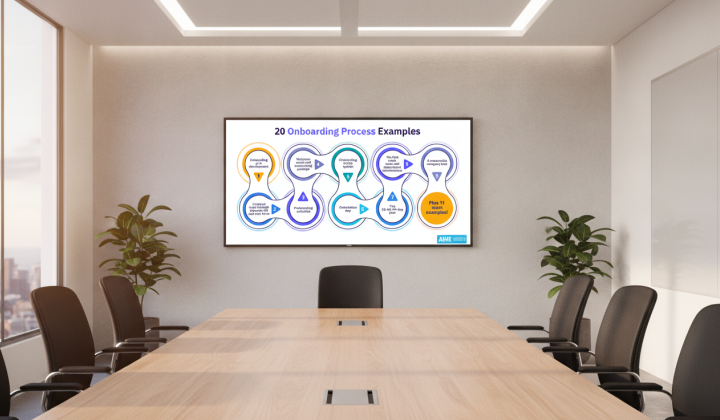
According to AIHR: AIHR has pulled together 20 onboarding examples for HR professionals, arranged under four headings: creating an onboarding plan, preboarding and the first few days, connection and culture, and training plus long-term support. The article also includes survey statistics, a five-stage onboarding timeline, programs from Google, Zappos, Netflix, and Zapier, and six best practices for optimizing onboarding. For HR teams, this kind of benchmark can help turn a routine procedure into a strategic advantage.
A survey of U.S. employees who had started a new job within the previous year found that 42% felt the onboarding experience hit them with too much information at once. In the same group, 68% believed they were set up to succeed, while 39% were unsure about their role during onboarding. A typical onboarding process is often described in five stages:
- preboarding
- first day
- first week
- first 90 days
- first year
Research also showed that 84% of new hires found communication before and after the first day useful for forming working relationships. In addition, the 70-20-10 model suggests that 70% of learning and development takes place through hands-on work and informal contact with colleagues.
How Leading Companies Handle Onboarding
Real-world onboarding looks very different from company to company. Google asks new employees to complete surveys at 30, 90, and 365 days, which helps the company understand what newcomers need. Zappos uses a policy called 'The Offer': after about a week in the role, a new employee can resign and receive a payout if the job does not feel right. Netflix has built its employee experience around freedom and responsibility, values that first appeared in its 2009 culture deck, and gives new hires a Culture Memo. Zapier, a company that has been fully remote since day one, pairs each new employee with a buddy known as a 'Zap Pal.'
Marna van der Merwe, Lead Global HR Insights at AIHR, makes the case for a more human-centered approach: 'Onboarding should be designed around the experience you want people to have. Too often, it becomes all about efficiency and misses the bigger picture. Efficiency will not create productivity. If you create connection and engagement, people are prepared and able to contribute.'
She also warns against trying to use one framework for every situation: 'A universal onboarding process will hardly ever work unless your workforce is very similar. The experience should be consistent, but the way it is delivered can shift with the needs of different employee groups. For example, frontline staff will need an onboarding journey that looks very different from office-based workers.'
Overall, the article offers HR professionals a practical basis for rethinking their own onboarding approach. A successful program should be flexible and designed around people, not just paperwork. As talent competition becomes more intense, making the first months meaningful helps new hires integrate faster and stay engaged and satisfied over the long term.
As onboarding processes evolve, it’s crucial for companies to not only implement effective strategies but also to measure their success. A recent report highlights that a significant number of organizations struggle to assess the quality of their hiring efforts. Understanding how to track these metrics can provide valuable insights for improving onboarding and ensuring new hires thrive. For a deeper look into the challenges faced by companies in hiring quality, check out this article on the difficulties of tracking recruitment effectiveness.

Read also