Salary and Regional Criteria Tightened: Ukraine Government Overhauls Employee Reservation Rules

New Standards for Deeming Enterprises 'Critical' in Ukraine
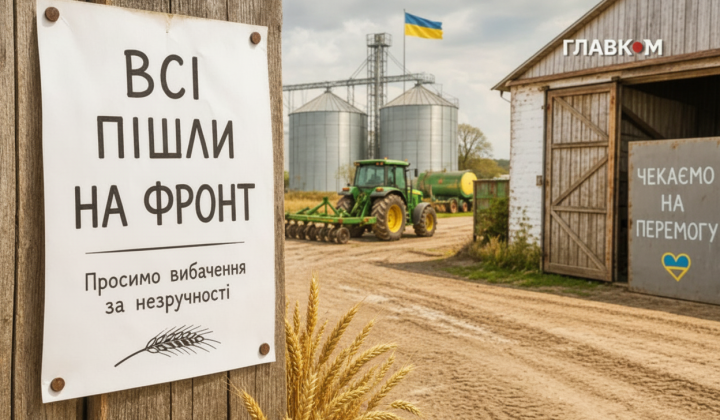
According to Главком: The Ukrainian government has introduced stricter benchmarks for classifying businesses as critical, raising the minimum average salary requirement for employee reservation from 2.5 to 3 times the minimum wage. This shift has stirred unease in the agricultural sector, as Regional Military Administrations (RMAs) have rolled out their own localized criteria that vary widely from one region to another. Such discrepancies could put small and medium-sized farms at risk of losing their reserved staff status during the peak fieldwork season.
In May, the Ministry of Economy, Environment, and Agriculture announced the first wave of adjustments. The average salary threshold climbed from 21,618 UAH to 25,941 UAH, with the older, lower limit remaining valid only for enterprises located in frontline areas. Part-time workers are now counted toward the reservation quota at just one place of employment. Government Resolution No. 692 was adopted in late May, requiring central authorities and RMAs to update their internal criticality criteria by June 10. By July 1, they must assess how well enterprises meet the new conditions.
Criteria for Agricultural Enterprises
A criticality decision that was valid as of June 2, 2026, will remain in force no longer than September 1, 2026. Resolution No. 76, issued late last year, transferred the responsibility for defining criticality for small and medium-sized agricultural businesses to the RMAs. In December 2025, the criteria for agribusinesses were modified as follows:
- land area must be at least 1,000 hectares, up from 500 hectares;
- annual revenue must be no less than 40 million UAH, doubled from 20 million UAH.
The requirements set by the RMAs have drawn sharp criticism. For example, in the Sumy RMA, agricultural enterprises must cultivate a minimum of 100 hectares, while livestock operations need at least 30 head of cattle, 300 pigs, 300 sheep or goats, or 1,000 poultry. The Cherkasy RMA mandates 10 hectares for fruit, berry, vegetable, and potato crops, and 100 hectares for other crops (up from 50 hectares). In the Kirovohrad RMA, land requirements rose from 100 to 200 hectares, and the tax burden per hectare increased from 3,200 to 3,800 UAH. The Odesa RMA also lifted its land threshold from 100 to 200 hectares, while the Rivne RMA raised its limit from 40 to 50 hectares and the minimum number of employees from 5 to 10. In the Dnipropetrovsk RMA, the criterion is an annual revenue of at least 500,000 UAH.
In the Khmelnytskyi region, 683 enterprises are currently classified as critical. Since the start of martial law, 64 companies have lost this status. The Khmelnytskyi RMA increased the land bank requirement for agricultural businesses from 50 to 100 hectares, with revenue per hectare needing to reach 20,000 UAH in the previous year. Up to 30 farming companies may lose their ability to reserve employees.
“The system must be transparent, fair, and protected from manipulation. The adopted changes help maintain a balance between defense needs and the stable operation of enterprises.”
Oleksiy Sobolev
Nevertheless, farmers have voiced concerns about the new criteria. Roman Uzhva, Deputy Head of the Khmelnytskyi RMA, noted that the previous requirement for industrial enterprises was at least 100 registered employees, but that figure has now been revised down to 30 registered employees.
Dmytro Solomchuk expressed hope that amendments would be proposed to allow small farmers to secure reservations, warning that 'otherwise, small farming will be completely crushed.' Ivan Slobodyanyk emphasized, 'We want the Ministry of Economy to provide methodological guidelines, because the criteria issued by the RMAs vary greatly.'
Anatoliy Hayvoronsky remarked, 'If all farmers are taken away, who will work the land? Probably large holdings,' highlighting the risk that the new rules could favor big enterprises at the expense of small and medium-sized agricultural businesses.
The overhaul of employee reservation criteria for agricultural enterprises in Ukraine has sparked anxiety among farmers, as the updated requirements could significantly complicate operations for small and medium-sized farms. The patchwork of regional standards imposed by RMAs may lead to confusion and threaten the stability of the agricultural sector, especially during the busy fieldwork period. Government bodies must strike a balance between military needs and support for small businesses to ensure the country's agricultural production remains effective.
As the government tightens its grip on employee reservation standards, concerns are mounting about the lack of clarity surrounding these new regulations. This uncertainty is particularly evident in the agricultural sector, where the Ministry of Economy's refusal to clarify the criteria has left many businesses anxious about their status and future operations.

Read also