The government presented seven flagship accessibility projects: what will change in Ukraine

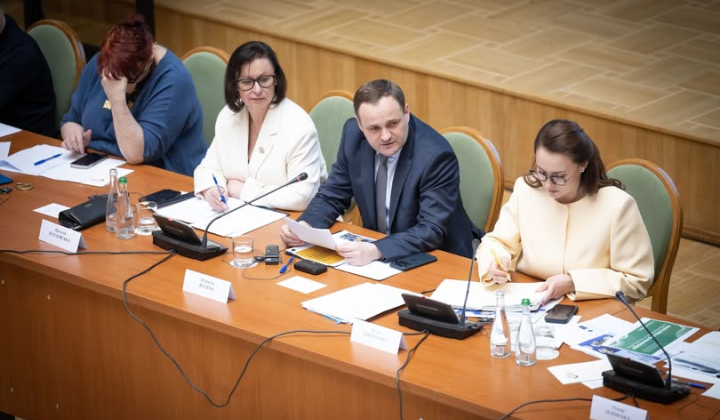
Meeting of the National Council for Accessibility
According to Міністерство інфраструктури: A meeting of the National Council for Accessibility took place in Kyiv, where the priorities of state policy on accessibility for 2026 were defined. During the event, chaired by Prime Minister of Ukraine Yulia Svyrydenko, seven flagship projects aimed at improving accessibility in Ukraine were presented. The meeting was attended by the First Lady of Ukraine Olena Zelenska, Deputy Prime Minister Oleksii Kuleba, members of the Government, Members of Parliament, as well as representatives of international organizations, including the UN, the Council of Europe, and WHO.
The meeting was moderated by the President of Ukraine's advisor on accessibility issues, Tetiana Lomakina. During the event, it was announced that the presentation of the State Standard of Correct, Barrier-Free Language will take place next week. Oleksii Kuleba also presented the flagship project of the Ministry of Development named 'Development of Institutional Capacity of Local Self-Government on Accessibility Issues'. The implementation of this project is scheduled for 2026.
Current Status of the Implementation of the Measures
As of today, about 2.6 thousand of nearly 4 thousand planned measures of the National Strategy for Creating a Barrier-Free Space have been completed, which constitutes 67% of the total. The best performance in implementation is demonstrated by:
- Chernihiv region
- Vinnytsia region
- Volyn region
- Kyiv region
In her comments, Olena Zelenska emphasized the importance of practical use of standards, stating:
“It is very important that this standard does not remain at the level of decisions but is practically used by every official. Correct language should become the language of education and healthcare, administrations, law enforcement, services – everything that surrounds us daily. Language should also be barrier-free.”
Oleksii Kuleba stressed the importance of implementing standards, stating:
“In addition to projects that are already being implemented in communities – primarily barrier-free routes, the work will be continued and scaled. At the same time, three key components are in focus: clear standards, people who implement them, and direct control at the local level. Standards alone do not change anything – it is people who make changes. We need more trained and competent professionals in communities. There is a clear signal and demand from the regions: strengthening of personnel potential is needed.”
Thus, the meeting of the National Council for Accessibility became an important stage in the implementation of the accessibility policy in Ukraine, which aims to create a barrier-free space for all citizens.
The meeting of the National Council for Accessibility signals an intensification of the efforts of the government of Ukraine in ensuring accessibility for various categories of the population, including people with disabilities. The presentation of flagship projects and the announcement of standards for barrier-free language are indicative of the state’s aspiration to integrate inclusive practices into various spheres of life. The implementation of these initiatives could significantly impact the improvement of the quality of life for citizens and the formation of a more open society.

Read also