Despite Rescue Attempt, NASA's Swift Observatory Is Expected to Burn Up Before Year's End

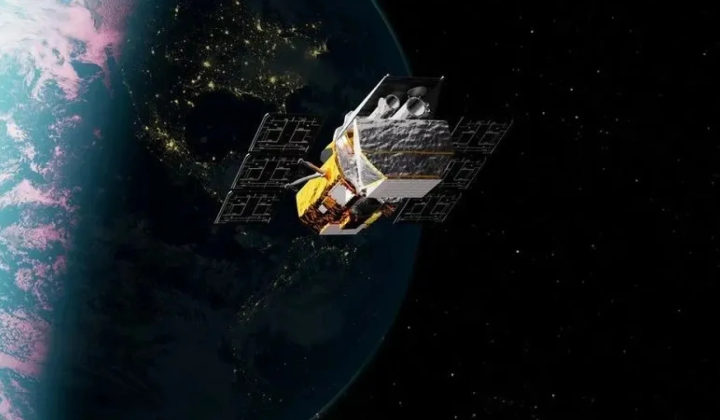
Swift Observatory's Predicament
According to НВ — Техно: Published: August 22, 7:08 PM
Swift, a space observatory launched in 2004 to investigate gamma-ray bursts, could be lost later this year as it descends into the atmosphere. A rescue vehicle named LINK, built by Katalyst Space, was deployed in July to try to save the telescope. But the mission encountered severe technical trouble: the craft began rotating uncontrollably in space, and by late July its orientation-control systems suffered electrical failures, leaving it unstable.
NASA contracted the development of LINK for $30 million, yet despite that investment, Swift's outlook remains bleak. The telescope's orbit has been decaying due to atmospheric friction, while increased solar activity has swollen Earth's upper atmosphere, drawing the observatory closer to the surface. If conditions do not change, Swift will enter denser layers of the atmosphere and stop functioning.
Next Steps and Challenges
After the failure of the orbital-rescue plan, LINK now intends to approach Swift and collect data that could prove useful for future satellite-servicing missions. Sean Domagal-Goldman, director of NASA's astrophysics division, commented:
"We knew this was a high-risk, high-reward mission-the first attempt of its kind, developed on an unprecedented timeline."
Discussions about how to proceed are still under way as risks to Swift continue to grow. Source: Live Science. Illustration: NASA Goddard Space Flight Center Conceptual Image Laboratory.
The situation with Swift underscores the difficulties facing modern space missions, especially when resources are limited and technology is fraught with risk. Developing LINK was itself an important experiment in space technology, with potential consequences for future efforts to service satellites and other objects in orbit. Losing Swift would deal a serious setback to gamma-ray burst research-these violent cosmic explosions are central to our understanding of the universe.

Read also