For Decades, Venus’s Spin May Have Been Misread as the Movement of Its Own Atmosphere

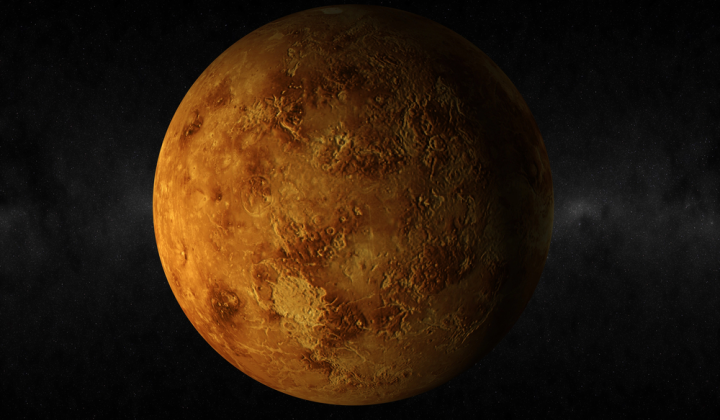
Venus’s Rotation Has Long Been Misidentified in the Data
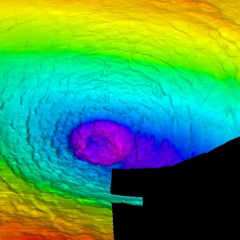
According to Radiotrek — Світ: Fresh research suggests that what scientists have been measuring as Venus’s rotation could actually be the circulation of its clouds. One full spin of the planet takes about 243 Earth days, whereas its cloud cover completes a lap in roughly four days. That dramatic difference is what planetary scientists call superrotation.
Because Venus is wrapped in thick clouds, its surface cannot be seen directly. To obtain reliable measurements, astronomers need to observe it at multiple wavelengths of light. The same hurdle exists when studying exoplanets, whose surfaces are impossible to resolve from Earth. An upcoming spacecraft, PLATO, set for launch in 2027, aims to discover hundreds of planets analogous to Earth and Venus.
The research paper appeared at 22:40 on Wednesday, 27 August 2026, and was highlighted by Daily Galaxy.
What a Correct Spin Rate Means for Planetary Science
Having an accurate picture of Venus’s rotation is vital for understanding its atmosphere and climate. This new perspective gives astronomers and planetary scientists a better foundation for future studies. It also demonstrates why advanced observing techniques matter, not only for planets in our Solar System but also for distant exoplanets, where such methods could one day help answer whether life might exist beyond Earth.
Understanding the complexities of planetary atmospheres extends beyond Venus. For instance, NASA's Voyager missions have provided invaluable data about the outer reaches of our Solar System, even enduring extreme temperatures of 50,000 degrees. These missions highlight the importance of advanced technology in exploring our universe, much like the upcoming PLATO mission, which aims to uncover new worlds. Learn more about the challenges and discoveries at the edge of our Solar System in this insightful piece on NASA's Voyager missions.

Read also