Hundreds of New Genomes Discovered in First Decoding of Wild African Lions’ Microbiome

The Hidden Microbial World of Africa's Apex Predator
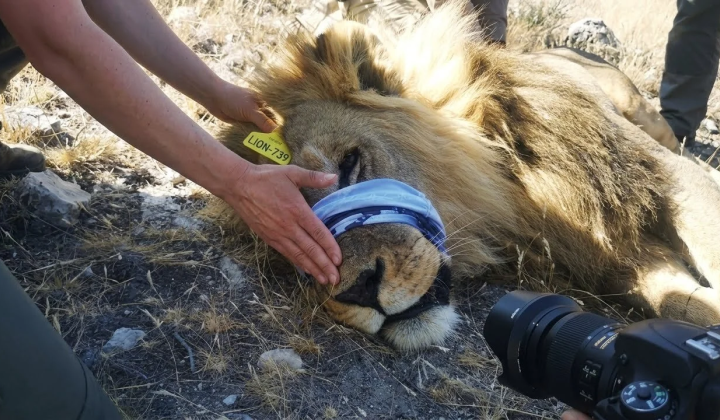
According to НВ — Техно: Researchers at the University of the Witwatersrand have successfully decoded the microbiome of wild African lions for the first time. They analyzed 23 fecal samples from 20 lions living in Namibia’s Etosha National Park. Published in the journal Animal Microbiome, this study marks a major advancement in understanding the complex microbial communities inhabiting wild animal species.
The team reconstructed 318 bacterial genomes and 102 viral genomes, most of which are previously unknown and absent from global genetic databases. Initially, 24.5% of the DNA sequences could not be classified. However, after incorporating these new genomes, the proportion of unidentifiable DNA dropped sharply to just 4.5%. This highlights the significant gaps present in current genetic reference libraries, especially concerning wildlife.
Distinct Microbial Pathways Adapted to a Carnivorous Diet
Scientists uncovered unique microbial processes that break down purine compounds like adenine and guanine into urea. These purines are abundant in the raw meat that forms the lion’s primary diet. The computational effort required to process this data involved tens of thousands of CPU hours, generating terabytes of information.
Professor Scott Hazelgerst described the challenge as “like piecing together hundreds of jumbled puzzles without all the pieces and no instruction manual.”
He added that “digital systems cannot identify DNA sequences if they aren’t already documented in existing catalogs.”
This research opens new avenues for studying the microbiomes of wild animals, emphasizing their ecological importance in species conservation efforts.
Understanding the microbiomes of wildlife is crucial because these microbial communities play vital roles in animal health and nutrition. Insights gained from such studies can inform conservation strategies and offer deeper understanding of how species evolve and adapt to rapidly changing environments. This is particularly relevant amid global climate change and increasing human impact on natural ecosystems.
As researchers delve deeper into the complexities of microbial life, the recent discovery of a unique single-celled organism that utilizes two stop codons to encode different amino acids highlights the incredible diversity of microbial adaptations. This finding not only expands our understanding of microbiomes but also emphasizes the importance of studying these organisms in various ecological contexts.

Read also