Signs of Reactivation Found in Botswana’s Ancient Khurutshe Fault Suggest Potential San Plate Split

Reactivation of the Khurutshe Fault Discovered Beneath Botswana
According to НВ — Техно: Geologists have uncovered evidence indicating renewed activity along the Khurutshe tectonic fault located beneath Botswana. This fault, which formed around 180 million years ago within the Kalahari Craton, may signal the initial stages of a new tectonic plate boundary emerging. The findings challenge the long-held view of southern Africa as a geologically stable block and raise the possibility that the San Plate could be dividing into northern and southern segments.
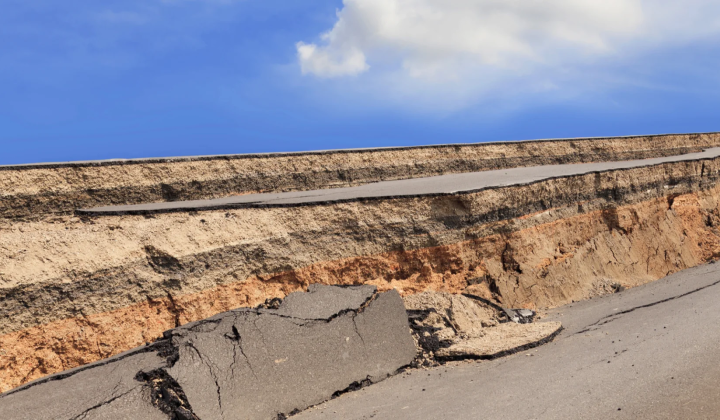
The Khurutshe Fault, featuring an approximately 80-kilometer-long escarpment with elevation differences reaching up to 120 meters, is an ancient failed rift within the craton that is showing signs of reactivation. The research involved extensive fieldwork including:
- excavation of trenches;
- site examination during the construction of a national water pipeline;
- utilization of electrical resistivity tomography;
- and analysis of data from 20 boreholes.
Researchers identified three main geological layers: a roughly 10-meter-thick upper unit composed of Kalahari Desert sediments, an 80-meter Jurassic sandstone layer, and a Precambrian basement. The Jurassic sandstone contains white calcite veins formed by the movement of hot fluids, indicating past tectonic activity.
Significance of the Findings
The resurgence of fault movement is supported by the displacement observed in Kalahari sands, most of which have been deposited during the past 2.6 million years. Tectonic forces appear to be exploiting an ancient boundary where the oldest parts of the Kalahari Craton converge. As Boniface Kgosidintsi from Botswana International University of Science and Technology explains:
“Khurutshe is a long-standing failed rift within the craton that is becoming active once again.” - Boniface Kgosidintsi
Folarin Kolawole, a geologist at Columbia University, emphasizes that “even ancient continental blocks contain internal zones of weakness that can evolve into new tectonic plate boundaries.” He adds that “several attempts at reactivating old faults may be necessary before a continent fully splits.” Rift zones in southern Africa are widening more slowly compared to the more active East African Rift System in Malawi, Kenya, and Ethiopia.
The process of continental breakup in this region is expected to span millions of years, with some rifts ceasing activity without causing a full split. This discovery highlights the importance of continued research to better comprehend the geological processes shaping the African continent.
The renewed motion along the Khurutshe Fault could profoundly affect the geological framework of southern Africa. This study reveals that even seemingly stable regions can experience new tectonic movements, opening fresh avenues for understanding the forces that shape continents. Further investigations will be critical in assessing how these changes may impact the region’s environment and economy in the future.

Read also