Tracing Ancient Alien Civilizations Through Microparticles in Lunar Soil

A Novel Strategy to Detect Extraterrestrial Artifacts
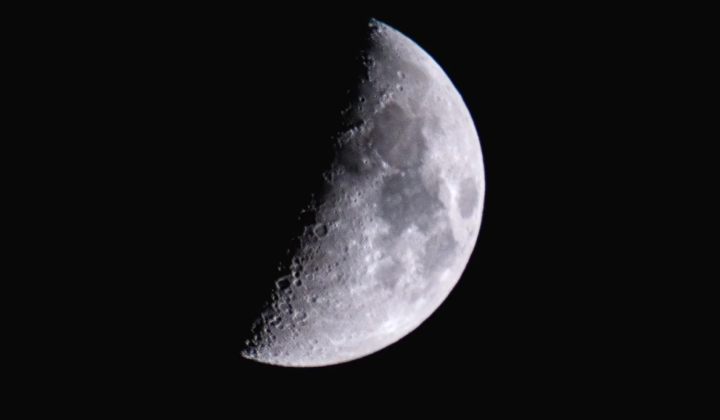
According to НВ — Техно: An international team led by Lewis Pinault from the SETI Institute has introduced an innovative method to uncover evidence of ancient alien civilizations. They propose that microscopic technological dust, preserved within lunar soil, could serve as tangible relics of extraterrestrial activity. Using computer simulations, the researchers demonstrated that particles approximately 0.3 micrometers in radius can travel through interstellar gas streams over hundreds of millions of years. The Moon's lack of atmosphere, oceans, and tectonic activity makes its surface an exceptional archive for such particles, shielding them from degradation.
Techniques for Detecting and Analyzing Microparticles
The study highlights that a subset of these particles decelerates to speeds below 5 km/s due to solar radiation pressure, allowing their structures to remain intact upon impact with the lunar regolith. The lunar soil, constantly stirred by micrometeorite impacts, particularly within its top one-meter layer over the past four billion years, further aids in preserving these materials.
During the Apollo missions, Earth received 382 kilograms of lunar regolith samples. Advanced analytical methods now offer the potential to identify artificial particles indicative of alien technology. Proposed detection approaches include:
- machine vision algorithms,
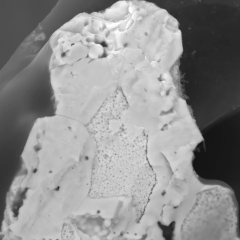
- scanning electron microscopy,
- and ion mass spectrometry.
The researchers aim to distinguish unnatural alloys, exotic isotopic ratios, and layered nanostructures that cannot be confused with ordinary meteorites or debris from human spacecraft.
Notably, astronomer Alexey Arkhipov coined the concept of 'Arkhipov particles' in the 1990s, laying groundwork for this field of study. As Ian Crawford remarked,
“it's akin to searching for a needle in a haystack.”
Their findings have been published as a preprint on arXiv (ID 2606.24028), with hopes that this work will propel further investigations.
This research, introducing cutting-edge detection techniques for ancient alien artifacts, could revolutionize astronomical and space exploration methodologies. Given the Moon's proximity to Earth, studying its soil might reveal insights into technologies used by other civilizations. Successfully identifying such particles would either confirm or refute the existence of extraterrestrial technologies, opening new avenues for scientific inquiry into our cosmic neighborhood.
As researchers delve deeper into the mysteries of our universe, the discovery of ancient radio emissions from neutral hydrogen, which have traveled to Earth for billions of years, adds another layer of intrigue to the search for extraterrestrial life. This finding not only complements the innovative techniques being developed to identify signs of alien technology in lunar soil, but also opens new avenues for understanding the cosmos and our place within it.

Read also