Over 240,000 Years, the Great Salt Lake Expanded Tenfold Twice, Transforming into a Freshwater Reservoir

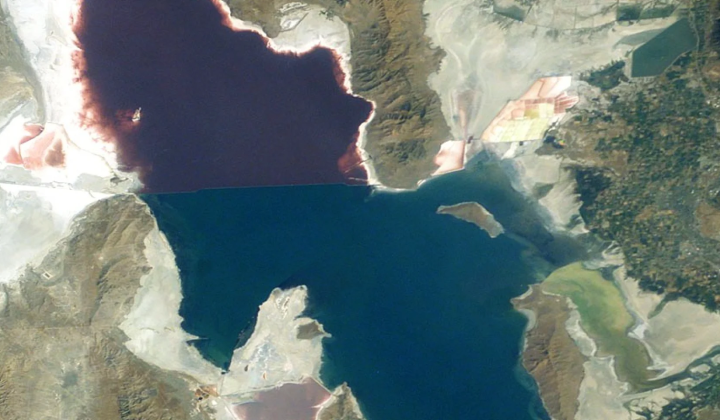
Insights from the Great Salt Lake Sediment Study
According to НВ — Техно: Analysis of sediment layers from the Great Salt Lake reveals that over the past 240,000 years, the lake underwent two dramatic expansions, each increasing its size by ten times and transitioning into a vast freshwater body. Today, the Great Salt Lake holds the title of the largest saltwater lake in the Western Hemisphere, covering approximately 4,144 square kilometers. A team of American scientists examined a 120-meter core of sediment from the lake bed, uncovering two distinct periods when the lake contained abundant freshwater.
Historical Phases of the Lake's Evolution
The first phase corresponds to Lake Bonneville, which existed between 30,000 and 16,000 years ago. During this time, the lake's size was sustained by river inflows that contributed to its expansion. The second phase dates back roughly 140,000 to 135,000 years ago, centered around the Little Valley area. The factors behind the water level fluctuations during this earlier period remain unclear. Researchers determined the age of sediment layers through radioactive mineral decay analysis and assessed salinity by examining microscopic chemical traces left by ancient microorganisms.
In some parts of the Great Salt Lake, salinity levels reach up to ten times that of ocean water, with depths approaching 300 meters during these historic phases.
The recent shrinkage and increasing salinity of the Great Salt Lake are primarily driven by climate-related evaporation. These findings provide valuable insights into the region's climate history and evolving ecosystems, emphasizing the urgent need to monitor changes in freshwater resources.
Research on the Great Salt Lake plays a crucial role in understanding how climate change impacts water resources.
Studying the lake's past transformations can improve predictions about future ecosystem shifts and help develop effective conservation strategies for the area's water supplies. Continuous monitoring of such natural phenomena is essential for adapting to climate change and ensuring sustainable water management.

Read also