Discovery of the Massive Marsupial Saber-Tooth Pampaluctor calibar Reshapes Understanding of Ancient South America

The Colossal Saber-Toothed Predator
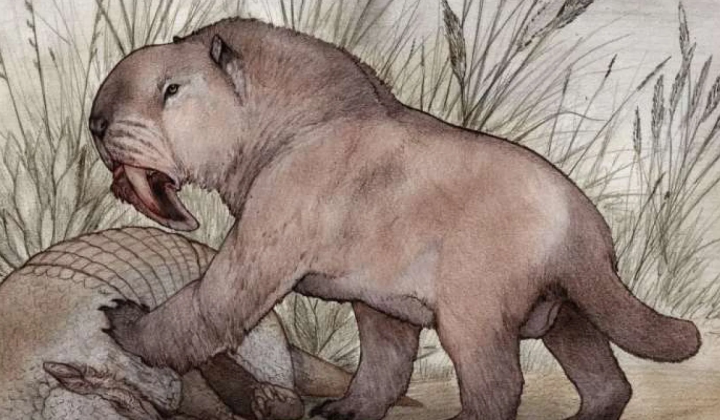
According to НВ — Техно: Researchers have uncovered a new species of enormous marsupial saber-toothed predator named Pampaluctor calibar, altering previous views on the ecosystems of prehistoric South America. This extinct sparassodont belongs to a group of carnivorous marsupials, and a well-preserved skeleton found on the continent allowed scientists to estimate its weight at around 100 kilograms. This makes Pampaluctor calibar one of the largest predatory mammals known from the region.
Adaptations and Evolutionary Insights
The creature’s robust forelimbs and thick neck suggest it was an ambush hunter, specially adapted to its environment. Studies also reveal that native predators like Pampaluctor calibar coexisted with the earliest North American migrants for a longer period than previously assumed. This finding challenges established ideas about evolutionary dynamics during that era.
Paleontologists are actively searching for skull or tooth fossils of Pampaluctor calibar to better determine its precise position in the evolutionary tree. The discovery, published on October 6, confirms that this species was a top predator in its ecosystem, highlighting its key role in understanding ancient continental ecologies.
This breakthrough contributes significantly to knowledge about the evolution of carnivorous mammals and their interactions with other species within their environments. It also offers valuable context for how climate and habitat changes affected biodiversity in the past. Discoveries like this emphasize the critical role of paleontological research in piecing together Earth’s biological history.
In addition to the groundbreaking findings about Pampaluctor calibar, recent discoveries in Bavaria have unveiled new Miocene bird species, providing further insights into ancient ecosystems. These findings highlight the dynamic interplay between various species during prehistoric times. For a deeper understanding of how these avian discoveries relate to the evolution of biodiversity, read more about the new bird species found in Bavaria.

Read also