Silk Traces Discovered on Bronze Masks and Ritual Artifacts from Ancient Shu Civilization in China

Unearthing Silk Residues in the Ancient Shu Culture
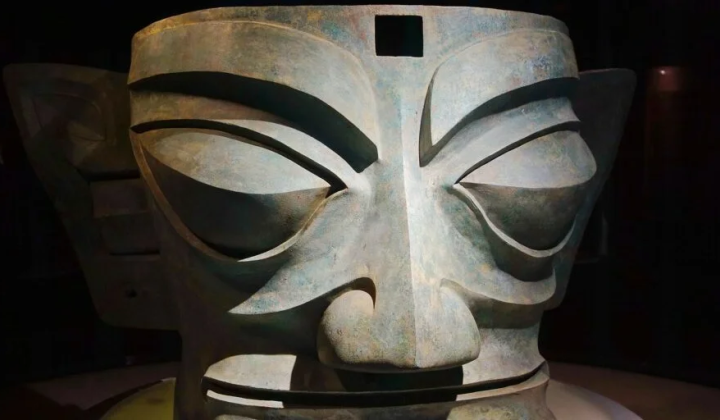
According to НВ — Техно: Archaeologists have identified traces of silk on bronze masks and various ritual objects from the ancient Shu civilization, uncovered at the Sanxingdui archaeological site in China. Dating back to between 1300 and 1046 BCE, these findings highlight the significant role textiles played in ceremonial practices and suggest the ancient Chinese also engaged in fabric dyeing. The preservation of silk was enabled by the corrosion of bronze, which helped maintain the shape of the silk fibers.
Silk remnants were detected across a wide range of artifacts, including:
- bronze masks
- gold ornaments
- jade tools
- ivory fragments
Notably, a large bronze mask retrieved from the sacrificial pit K3 contained three distinct silk residue patches near the right eyebrow and eye area. Detailed textile characteristics were recorded from these spots. In total, silk traces were found on 94 bronze items spanning 28 different categories, as well as on gold foil, jade implements, and ivory pieces.
Laboratory examinations revealed the silk fibers were coated with red ochre-a mineral pigment rich in iron-and calcite, likely serving as a surface treatment. Additionally, dark red organic dye traces were present, although the specific plant source of this pigment remains unidentified. These materials were scrutinized using electron microscopy and infrared spectroscopy, allowing for an in-depth analysis.
Digital Reconstruction of Ceremonial Structures Near Fanshan Necropolis
In parallel, the Zhejiang Provincial Institute of Cultural Relics and Archaeology digitally reconstructed three ceremonial buildings near the Fanshan necropolis, located on the outskirts of the ancient Liangzhu city in Zhejiang Province. This necropolis dates back approximately 5,000 years. Archaeologists documented 120 postholes believed to have supported wooden pillars, identifying three separate structures labeled F1, F2, and F3. The reconstruction integrated precise measurements, architectural studies, and ancient depictions of buildings, including those found on Liangzhu pottery.
These discoveries from Sanxingdui and Fanshan shed new light on the cultural customs and technological advancements of the ancient Shu civilization, emphasizing the importance of textiles in their ritual life.
The identification of silk on ancient artifacts reveals a more advanced knowledge of weaving techniques and dye application within early Chinese ritual contexts than previously understood. This underscores the social and cultural value of textile production in ancient societies and may prompt a reevaluation of their role in historical ceremonial practices. Meanwhile, the Fanshan research complements these insights by providing fresh perspectives on architectural traditions and ceremonial activities, enriching our broader understanding of cultural interactions in the region.
In addition to the significant findings at the Sanxingdui site, recent advancements in archaeological technology have allowed for a detailed digital reconstruction of ancient structures near the Fanshan necropolis. This initiative offers further insights into the ceremonial practices of ancient civilizations in China, highlighting the interconnectedness of cultural and ritualistic elements across different regions and eras.

Read also