Quebec Province Yields Largest Meteorite Impact Crater Found in Five Years

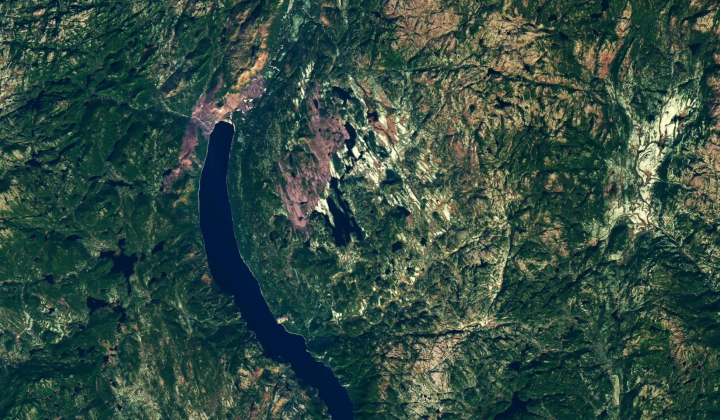
Discovery of the Uhukatiq Impact Crater
According to НВ — Техно: On September 22, 2023, amateur astronomer Joël Lapointe spotted a circular formation near Marsal Lake in Quebec using an online map. Subsequent investigations confirmed this structure as an impact crater approximately 390 million years old. This finding marks a significant advancement in the study of terrestrial impact sites. In October 2025, a research team led by planetary geologist Professor Gordon Osinski from Western University and head of the Impact Earth database conducted an expedition that verified the crater’s meteorite origin and measured its diameter at about 25 kilometers.
Named Uhukatiq in collaboration with the local Innu Ekuanitshit Indigenous Council, this crater is the largest impact site identified since the discovery of the Hiawatha structure in 2018. Fieldwork revealed a prominent central uplift and towering cliffs featuring distinctive fractures. The team faced challenging conditions, including wading through 50 meters of icy water and navigating dense marshes and thick brush-one of the toughest field experiences in Professor Osinski’s career spanning six continents.
Scientific Importance of the Find
The expedition also documented shatter cones in the surrounding rock formations, providing clear evidence of a meteorite impact. Rock samples collected during the study were analyzed in labs to precisely date the crater. This discovery highlights the crucial role of citizen science and NASA’s initiatives in exploring both Earth and outer space. To date, around 200 confirmed impact craters have been identified worldwide.
The Uhukatiq crater holds substantial value for geology, offering insights into Earth’s formation processes and its ancient history. Research on such craters enhances understanding of meteorite impacts’ effects on the planet and the evolution of life. Moreover, this discovery emphasizes the importance of collaboration between scientists and the public in uncovering new geological phenomena. With advances in technology and accessible platforms like online mapping, amateur researchers are increasingly contributing to significant scientific breakthroughs.
The discovery of the Uhukatiq crater not only sheds light on Earth's impact history but also parallels recent findings on other celestial bodies. For instance, a recently identified massive crater on the Moon could play a crucial role in future lunar explorations, emphasizing the importance of studying impact sites across our solar system.

Read also