Middle East Conflict: Expert Outlines Two Potential Scenarios for Global Oil Prices

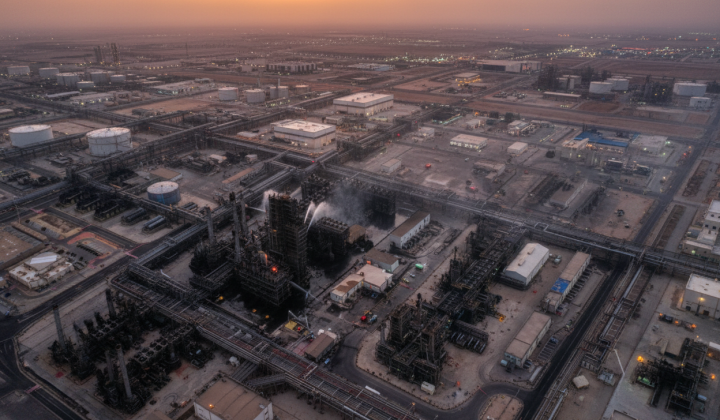
How the Middle East War is Affecting the Global Oil Market
According to Главком: Mykhailo Gonchar, President of the Center for Global Studies 'Strategy XXI', has analyzed the war's impact on the world oil market, detailing two primary scenarios and their potential price levels. The conflict's duration and its effect on regional oil infrastructure are the key factors that will likely determine future price trends. The Middle East is a crucial region for global energy security, making any disruption there a major concern for markets.
Two Possible Outcomes
A pessimistic scenario foresees a drawn-out confrontation lasting several months, which could lead to periodic attacks on infrastructure and problems transporting oil. In this case, prices could remain around $90 per barrel for several months.
An optimistic scenario, conversely, points to the conclusion of the U.S.-Israeli campaign within a month, potentially avoiding large-scale infrastructure damage. This would likely result in only a short-term price spike followed by a rapid decline.
It is important to note that there is currently no global oil shortage. However, the U.S. and Israeli operation, along with retaliatory Iranian strikes on Gulf states, triggered panic in the oil and liquefied natural gas markets. The primary cause for alarm was the potential closure of the Strait of Hormuz, a chokepoint through which 20-21 million barrels of oil pass daily, accounting for roughly 20% of global oil consumption.
Mykhailo Gonchar stated that 'there will be no apocalyptic prices of $120-150 per barrel. I do not think they will even reach $100.'
According to his forecast, the oil price could approach $90 per barrel before falling, potentially dropping below $50 by the end of the first half of the year. This suggests the oil market may remain under pressure, but a sharp price increase in the near term is not expected overall.
Gonchar's analysis underscores the critical need to monitor the Middle East situation, as any escalation could significantly impact the global oil market. Specifically, delays in transporting oil through strategically vital routes could fuel price speculation.
Given the current absence of a global oil deficit, it is crucial to recognize that predicted price fluctuations are likely tied more to political factors than to actual changes in production or consumption. This highlights the need for oil-importing nations to prepare for potential shifts in pricing, especially amid global instability.

Read also