Russia’s War Machine Now Operates Beyond Even Putin’s Control

How the War Is Reshaping Russia’s Economy and Society
According to ХВИЛЯ: The conflict in Russia has evolved into an autonomous system that now governs nearly every facet of national life. According to an analysis published by Foreign Affairs, even President Vladimir Putin may be unable to stop it. Both the economy and society have been so thoroughly restructured around the war effort that a swift conclusion is no longer possible without major upheaval.
After more than four years of fighting, Russia’s economy and social fabric have been fundamentally transformed. The Kremlin has elevated the war to the central organizing principle of economic and civic life. Data shows that real wages in Russia rose by roughly 8% in 2023 and 9% in 2024, with the median monthly salary reaching about 56,000 rubles-approximately $600-in 2024. However, wage growth slowed to 4.4% in 2025. Meanwhile, the wealthiest 5% of Russians control nearly 75% of the country’s total wealth, highlighting a deepening divide between the rich and the poor.
War Spending and Its Consequences
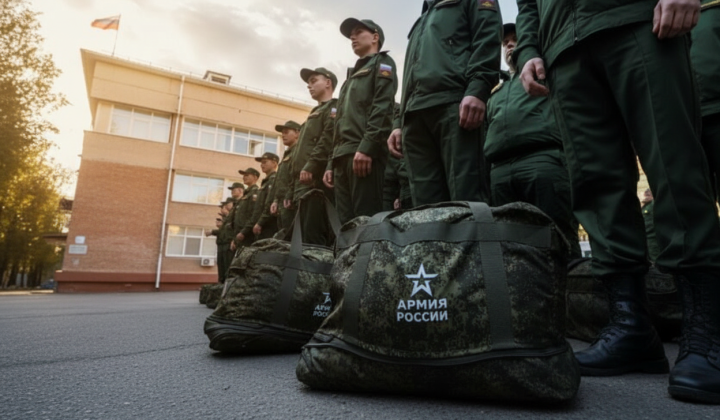
Defense and security now account for around 40% of federal expenditures, and the value-added tax (VAT) was raised from 18% to 22% in 2026. VAT funds nearly half of the federal budget. Since the start of the invasion, the number of defense industry enterprises has tripled, employing roughly 4.5 million people. Nizhny Tagil, a city of 300,000 located about 1,600 kilometers from Moscow, has become a hub for tank production.
An estimated 700,000 soldiers will eventually return from the front lines, with 140,000 already back home. The Kremlin plans to field 100 veterans as candidates for the State Duma in the 2026 elections. However, around 250,000 veterans are unemployed, according to data from Russian state media that was later deleted. Veterans are also 2.5 times more likely than non-combatants to be tried for murder. This underscores the distinct threat they pose, as their social reintegration becomes a critical challenge.
The war has also fueled a shadow economy, driven by sanctions that have spurred smuggling and counterfeiting from China, Turkey, and Central Asia. With a potential collapse in defense spending likely to trigger unemployment, strikes, and public discontent, the country remains under significant strain. As analyst Natalia Zubarevich notes, this situation reflects the
“law of small numbers,”
indicating limited room for meaningful change.
An examination of Russia’s current state reveals that the war has become more than a military conflict-it is now a foundational component of the nation’s economic and social structure. Given the massive defense expenditures and rising inequality, understanding how these factors might affect domestic political stability and social order is crucial. Amid growing tensions and social challenges, the Kremlin will likely need to take steps to maintain stability and control on the home front.
The ongoing turmoil within Russia's military efforts has not only reshaped its economy but has also intensified the pressure on the Kremlin to reassess its strategies. As the conflict drags on, the need for a potential exit strategy becomes increasingly urgent. For further insights into how mounting internal and external pressures are compelling the Kremlin to explore avenues for peace, read more about the growing calls for a war exit.

Read also