The Universe Fails a Homogeneity Test: Scientists Question the Standard Model

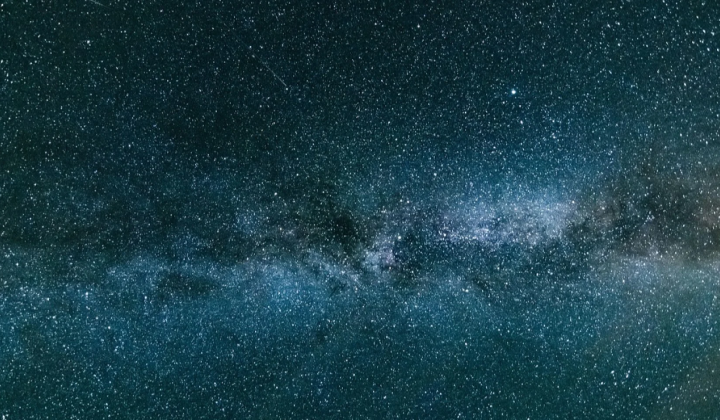
Challenging the Current Cosmological Framework
According to НВ — Техно: On July 7 at 6:30 PM, the Lambda-CDM model-the prevailing standard in cosmology-faces fresh scrutiny. This framework rests on the assumption that the cosmos is homogeneous on large scales. But a recently identified cosmic dipole anomaly now casts doubt on that core idea. For a long time, the cosmic microwave background (CMB), the afterglow of the Big Bang, was considered the strongest evidence of uniformity.
The Dipole Anisotropy of the CMB
The CMB is nearly perfectly symmetric, yet it exhibits a dipole anisotropy: one side of the sky appears about one-thousandth of a degree hotter than the opposite side. Scientists had previously attributed this effect to the local motion of our Solar System. To test that explanation, they applied the Ellis-Baldwin test.
The Ellis-Baldwin test stipulates that if the Universe is symmetric, the distribution of distant radio galaxies and quasars should align with the CMB fluctuations. For this study, researchers used new data catalogs from ground-based radio telescopes and infrared satellites. The results were unfavorable: the Universe failed the Ellis-Baldwin test, as the variation in matter density across space does not match the CMB fluctuations.
These findings challenge the foundations of modern cosmology, potentially leading to a reassessment of current theories about the Universe's structure and evolution. The detected cosmic dipole anomaly could open new avenues for cosmological research.
These results could mark a significant step in understanding cosmology, as they point to possible flaws in the standard model that scientists have relied on for decades.
If further anomalies continue to emerge, it may prompt a revision of theoretical foundations and the development of new models that better reflect the Universe's true nature. Understanding the causes of these anomalies could also lead to breakthroughs in particle physics and cosmology as a whole.

Read also