Are We Running Out of Resources? Coal for 125 Years, Uranium for Millennia


Assessing Coal and Uranium Reserves
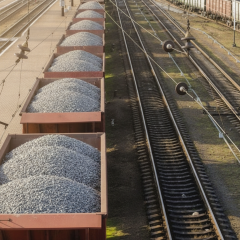
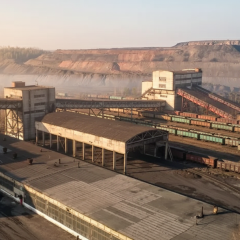
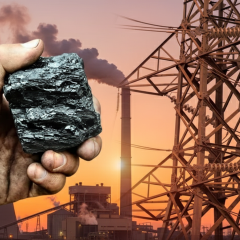
According to ХВИЛЯ: In the debate on the energy transition, political scientist Yuriy Romanenko presented data challenging predictions of a rapid depletion of coal and uranium resources. He noted that proven coal reserves stand at approximately 1 trillion tons, with current annual extraction reaching 8.5 billion tons. According to his analysis, at the current rate of extraction, coal supplies will last for 125 years.
Regarding uranium, Romanenko reported that reserves of this resource are around 8 million tons. Using current technologies, he estimates uranium would last for about 120 years. However, he also highlighted the potential of new technologies: fast-neutron reactors could dramatically extend uranium's usability, stretching its reserves to 10,000–12,000 years. Additionally, thorium reserves exceed those of uranium by 3–4 times, offering a potential alternative nuclear fuel source.
The Outlook for New Technologies
Economist Maksym Piven expressed skepticism about the widespread availability of closed nuclear cycle technologies, noting that currently only Russia has a somewhat developed capability in this area. However, he emphasized that Japan, Korea, the United States, and France are actively working on developing next-generation reactors. Romanenko also confirmed that, considering resources from the old cycle, they would suffice for another 125–150 years.
Thus, the analysis of coal and uranium reserves indicates that, despite concerns, these resources are not as critically depleted as previously thought. This discussion is particularly relevant for nations formulating long-term energy security strategies.
It is important to note that discussions about the reserves of energy resources like coal and uranium have significant implications for the energy policies of countries dependent on these sources.
Yuriy Romanenko
The prospects of using new technologies, such as fast-neutron reactors, could substantially alter the resource landscape in the future, as they open possibilities for more efficient and prolonged use of nuclear fuel. The development of energy technologies in other countries also underscores the importance of international cooperation in this field.

Read also