When printed objects keep evolving: The promise of 4D printing

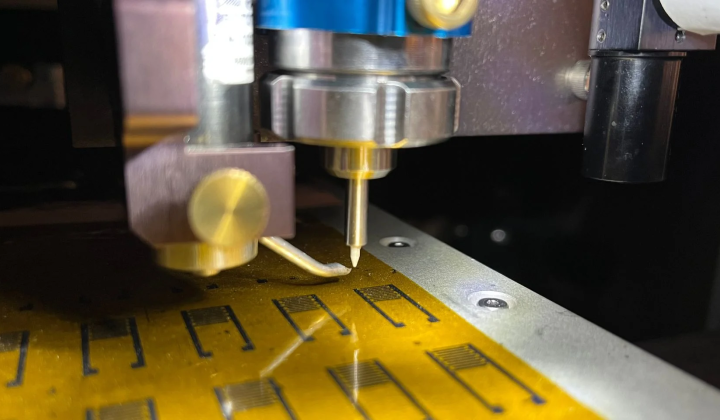
Understanding 4D printing
According to НВ — Техно: 4D printing builds on the foundation of 3D printing, but with a crucial difference: the printed object can alter its shape after production when exposed to stimuli like heat, water, light, or electrical signals. The concept was brought to wide attention in 2013 by architect and computer scientist Skylar Tibbits. Here, the fourth dimension refers to time, not an additional spatial axis.
This technique relies on materials that respond to their environment. Shape-memory polymers, for instance, can revert to a pre-programmed configuration when heated, while hydrogels may swell or shrink in the presence of water. Researchers are also exploring liquid-crystal elastomers, self-healing materials, and multi-functional composites. A notable trait is that different portions of an object can react to a stimulus at varying speeds or intensities.
Where it could be used and what stands in the way
Potential applications for 4D printing span several fields:
- medicine
- robotics
- aerospace
- electronics
- automotive manufacturing
- construction
In healthcare, the technology is being studied for drug delivery, tissue engineering, diagnostic tools, and implants. In soft robotics, 4D-printed components can change shape without conventional motors. The aerospace sector sees promise in lightweight structures that are printed compactly and later expand into their final form.
Still, significant barriers remain before 4D printing can enter mass production. Key challenges include controlling how fast shape changes occur, ensuring durability, achieving repeatable results, making materials work reliably across different conditions, and scaling the process for large industrial parts. At present, much of the work is in the laboratory or concept-demonstration phase. Experts expect 4D printing to complement rather than replace 3D printing: a 3D-printed item generally keeps the shape it is given, but a 4D-printed item can have its form programmed in advance.
As the technology matures, it could unlock fresh possibilities in medicine, aviation, and beyond. But moving from the lab to commercial reality will require solving the technical obstacles that currently limit industrial adoption. Advancing the materials used in 4D printing will be central to making this progress happen. Scientists and engineers therefore face a dual challenge: refining the technology itself and identifying practical uses that can meaningfully transform manufacturing and other industries.
As advancements in manufacturing technologies continue, 4D printing stands out for its potential to revolutionize various industries. For instance, recent developments in cost-effective 3D printing techniques have drawn attention to how materials can be optimized for specific applications, which may complement the evolving landscape of 4D printing. Understanding the interplay between these innovations could pave the way for even more groundbreaking solutions in the near future.

Read also