A Guide to Managing Contingent Workers as 65% of Companies Plan to Expand Their Use

The Rise of the Contingent Workforce
According to AIHR: New data reveals that 65% of companies intend to increase their reliance on contingent labor over the next two years. This trend underscores the growing necessity for effective management of non-permanent workers, including contractors, freelancers, consultants, temporary staff, and gig economy participants. This guide will outline the definition, significance, challenges, and best practices for managing a contingent workforce, along with software solutions that can streamline the process. This shift reflects a broader move towards operational agility in a dynamic global economy.
Challenges and Solutions in Contingent Workforce Management
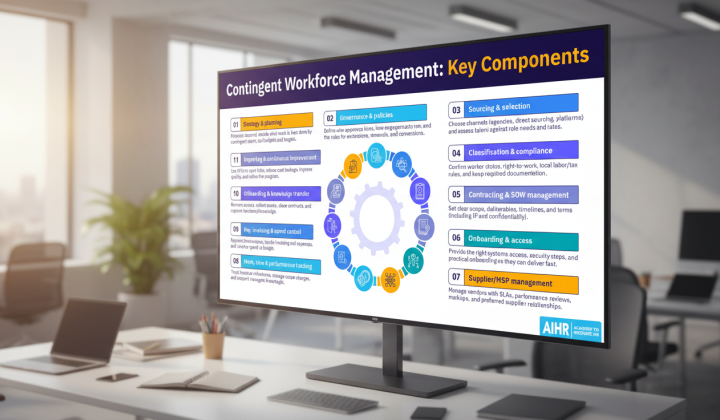
Managing a contingent workforce is a complex undertaking involving the planning, sourcing, and supervision of non-permanent staff. Key tasks include talent sourcing, contract management, compliance monitoring, performance tracking, and cost control. However, data from Indeed Flex indicates that 75% of HR leaders struggle with cost visibility, and 70% lack proper workforce oversight due to outdated systems, highlighting significant operational hurdles.
The primary challenges in contingent workforce management are:
- Limited visibility into the workforce
- Inconsistent sourcing and hiring practices
- Worker classification risks
- Fragmented onboarding processes
- Difficulty measuring performance and outcomes
- Cost leakage and budget overruns
- Poor integration with overall workforce planning
- Gaps in responsibility between HR, procurement, and line managers
To overcome these obstacles, companies should establish clear policies, create a single source of truth, and implement a centralized management system. Standardizing processes for vendor selection, onboarding, and offboarding is crucial, as is applying consistent worker classification, tracking performance metrics, controlling costs, and integrating contingent labor into broader strategic workforce planning.
Effective management also requires close partnership with procurement, legal, and finance departments. Specialized software can be instrumental, with leading platforms including:
- SAP Fieldglass
- Beeline
- Workday VNDLY
- Coupa Services Procurement
- Oracle Cloud Procurement
- VectorVMS
- TalentNet
Leveraging these tools can help organizations enhance efficiency and address the critical challenges in this vital area of operations.
The growing trend toward contingent labor signals a fundamental shift in corporate talent strategy, largely driven by the need for greater flexibility. Given the inherent complexities of managing a blended workforce, organizations must adapt their strategies and tools to ensure both effectiveness and compliance. Successfully implementing new technologies and management frameworks can significantly impact a company's productivity and bottom line in the coming years.

Read also