ESA Reveals Massive Crater from NASA’s DART Impact on Asteroid Dimorphos, Comparable to a Stadium

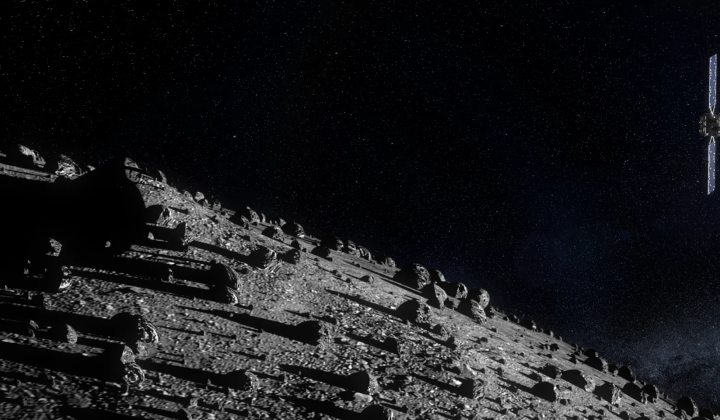
Hera Spacecraft Captures Impact Aftermath on Asteroid Dimorphos
According to НВ — Техно: The European Space Agency (ESA) has released images from its Hera spacecraft, showcasing the dramatic results of NASA’s 2022 DART mission collision with the asteroid Dimorphos. According to Patrick Michel, the impact created a crater roughly the size of a sports stadium, spanning the entire width of Dimorphos. Despite this significant blow, the rest of the asteroid’s surface remains largely unchanged.
Impact Consequences and ESA’s Upcoming Exploration Plans
Following the collision, Dimorphos now tumbles erratically on its new orbit, surrounded by hundreds of fragments orbiting both it and its parent asteroid Didymos. In March 2023, NASA confirmed that the orbits of Dimorphos and Didymos around the Sun had been altered due to the DART mission. The images, taken from 25 to 30 kilometers away, were captured using a combination of instruments: the monochrome Asteroid Framing Camera, the multispectral Hyperscout H camera, and the Thermal Infrared Imager developed by the Japanese space agency JAXA.
ESA plans to maneuver Hera closer to the asteroids in December 2023 to obtain higher-resolution photos of the impact site. In January 2024, Hera will deploy two CubeSats-Juventas and Milani. Developed under Luxembourg’s leadership, Juventas will use radar to probe the asteroid’s interior and attempt a surface landing. The Italian CubeSat Milani will analyze dust and other particles surrounding the asteroid.
"The NASA DART mission has proven that we can alter an asteroid’s orbit."
Ian Carnelli, NASA
Carnelli emphasized, "Now Hera reveals the actual condition of the asteroid itself," adding that "together, these two missions mark a critical milestone toward making asteroid deflection a dependable method for planetary defense." NASA and international space agencies view orbit modification as a promising strategy to shield Earth from potential asteroid collisions.
This mission represents a major advancement in space technology and planetary protection tactics. It highlights humanity’s growing capability to intervene in natural cosmic events that could pose threats to Earth. The data gathered from DART and upcoming Hera investigations will significantly enhance our knowledge of asteroid characteristics and behavior-vital for safeguarding our planet in the years ahead.
As space exploration advances, the recent achievements of the ASTRA robotic system demonstrate the potential for autonomous construction in low Earth orbit. This innovation complements ESA's ongoing efforts to study and manipulate celestial bodies, showcasing the evolving landscape of space technology.

Read also