UK Researchers Develop Gel That Repairs Tooth Enamel and Fights Cavities

Could This Be the End of Cavities?
According to НВ — Техно: A team at the University of Nottingham in the UK has created a groundbreaking gel designed to restore tooth enamel, a tissue that doesn’t naturally regenerate. This innovative formula mimics the proteins responsible for enamel formation during early childhood and uses a specialized matrix to rebuild the tooth’s mineral structure.
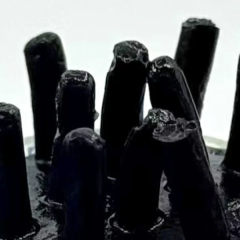
When applied, the gel forms a durable, thin layer that fills tiny cracks in the enamel through a process called epitaxial mineralization. It attracts calcium and phosphate ions from saliva, converting them into new, well-organized crystals. The regenerated enamel integrates fully with the tooth surface, restoring its original hardness and microscopic architecture.
Beyond enamel repair, the gel can also be used on exposed dentin to reduce tooth sensitivity and improve the bonding strength of fillings. Laboratory tests have demonstrated that the restored material withstands chewing, brushing, and acidic foods effectively. Its application is straightforward, comparable to fluoride treatments, making it accessible for widespread dental use.
The Future Impact of This Technology
This cell-free technology is designed for large-scale manufacturing. The startup Mintech-Bio, founded by the researchers, aims to launch a commercial version of the gel next year. This advancement has the potential to revolutionize dental care and significantly enhance oral health worldwide.
The gel offers a promising new approach to cavity prevention and enamel restoration. Its ease of use and proven durability could make it available not only to dental professionals but also directly to patients, increasing its adoption and impact.
Because the product doesn’t rely on living cells, it simplifies production and scalability, paving the way for broader market availability. This innovation may represent a key step toward reducing dental diseases and improving overall oral health for millions.
As advancements in regenerative medicine continue, researchers are exploring innovative solutions across various fields. For instance, a recent development by Canadian scientists involves a dissolvable hydrogel designed for tendon repair, showcasing similar potential in tissue regeneration. This new hydrogel technology could complement the efforts in dental care, highlighting the growing trend of utilizing biomaterials for restoring and enhancing bodily functions.

Read also