U.S. Failed to Achieve Iran War Aims Despite 13,000 Strikes, Foreign Affairs Analysis Finds

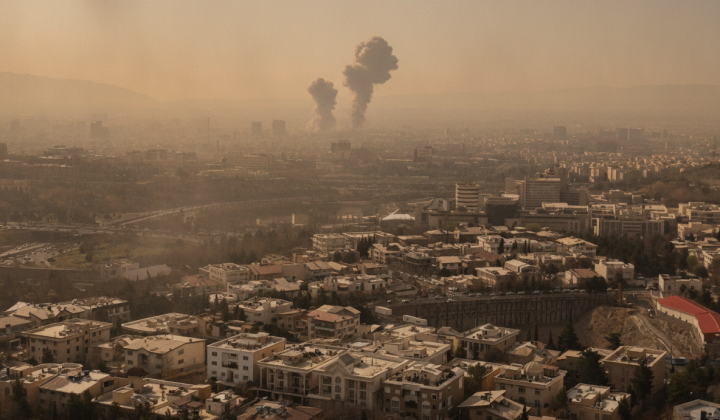
The U.S.-Iran Conflict
According to ХВИЛЯ: This analysis from Foreign Affairs, a leading U.S. foreign policy magazine, examines the U.S. war with Iran. Despite launching over 13,000 strikes, Washington failed to meet its strategic goals. The conflict lasted 39 days from February 28 to April 8, during which Iran fired more than 2,200 missiles and 4,400 drones. American losses included eight aircraft destroyed or damaged, among them an E-3 Sentry worth $300 million, and seven service members killed. Only 15 E-3 Sentry planes remain operational, and five KC-135 tankers were also damaged.
The article also points to issues with drone warfare. For context, Ukraine produces 4 million drones per year while the U.S. Army buys just 50,000. The Pentagon's Replicator initiative has already supplied hundreds of autonomous systems, with thousands more pledged. The Defense Department has invested over $1 billion to produce 340,000 drones by 2027, targeting at least 1 million drones by 2028.
Technological Challenges and Costs
In this environment, the U.S., Israel, and Gulf states intercepted 1,700 Iranian ballistic missiles and drones. But the cost is high: the U.S. used roughly half its Patriot missile stock and 50% to 80% of THAAD interceptors. As Paul Scharre notes, using a $4 million Patriot missile to shoot down a $35,000 Shahed drone will always be a 'Pyrrhic victory.'
Beyond the battlefield, the article discusses technological supremacy. Scharre states:
'America's technological dominance is waning'
and
'methods, not hardware, decide battlefield outcomes'
. On AI, Chinese models trail U.S. ones by a few months, and companies like DeepSeek, Moonshot, and MiniMax borrow from others' work.
Anthropic co-founder Jack Clark estimates that advanced AI cyber capabilities will be publicly available within 12 to 18 months. Meanwhile, over 1,000 Google and OpenAI employees signed an open letter urging refusal of Department of Defense requirements, and in April 2026, more than 600 Google workers objected to using new models in classified projects.
Historian Stephen Biddle observes that in land wars from 1956 to 1992, the average technology gap was under three years. This highlights the need for rapid tech adaptation in modern conflicts, leaving open questions about the future of military strategy and tech development.
The article underscores that modern warfare's complexity often defeats traditional approaches. The Iran war and its technological challenges demand a strategic rethink, especially as drones and AI become key combat tools. It also challenges defense spending models, as interception costs rise and effectiveness may not match expectations. In such conditions, cooperation between governments and the private sector in technological development becomes critically important.
As the U.S. grapples with its military setbacks, the evolving nature of warfare highlights critical lessons from recent conflicts. Understanding how modern battles are being reshaped can provide valuable insights into the dynamics at play in the U.S.-Iran conflict. For a deeper analysis of these transformative trends in warfare and their implications, explore how the lessons from Ukraine and Iran are redefining military strategies.

Read also