Anomalously Dry Summer Exposes Roman Altar to Jupiter at the Bottom of the Danube in Hungary

Anomalously Dry Summer in Hungary
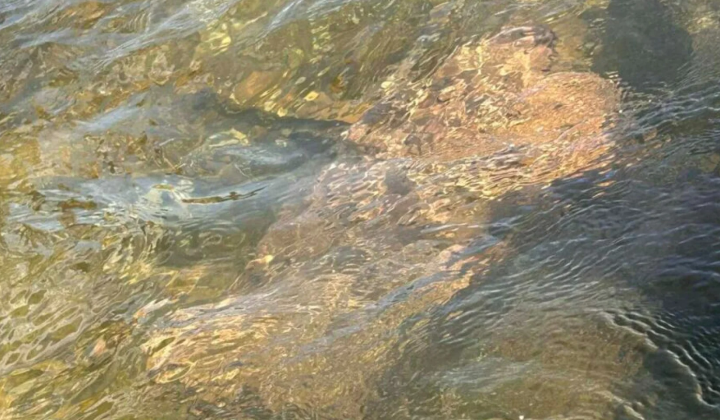
According to НВ — Техно: The anomalously dry summer and low water levels in the Danube near Dunaújváros in Hungary have led to the exposure of riverbed sections that are usually submerged. During a field study conducted on August 3 and 5 by staff from the Intersis Museum along with underwater archaeologist Attila J. Tot, significant archaeological finds were discovered, including a Roman limestone altar dedicated to Jupiter, as well as two fragments of limestone slabs with inscriptions.
Discovery of Archaeological Finds
The initial goal of the research was to find traces of the medieval Pentel monastery; however, the monastery was not located. Nevertheless, during the survey of the Danube riverbed, archaeologists retrieved a limestone altar dedicated to Jupiter. On August 5, museum staff discovered the first fragment of the Roman limestone slab, which was documented and photographed on-site, and later that same morning, a second carved fragment was found. It is known that these two fragments are likely Roman slabs, and specialists are currently determining their type: a funerary monument, a construction inscription, or a dedication.
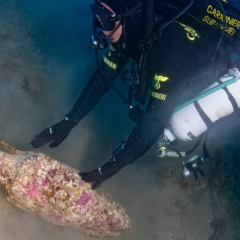
During the survey, the staff encountered a suspicious unexploded ordnance, prompting the dispatch of a demining team as a precaution. Unexploded ordnance from World War II is recognized as a significant hazard in this region. At this time, the altar to Jupiter and the two limestone fragments have been transferred to the museum, where they are undergoing documentation and study.
It is worth noting that there have been previous reports of record heat in Europe, which uncovered over 200 Nazi vessels at the bottom of the Danube. These vessels were deliberately sunk in the fall of 1944 to slow the advance of Soviet troops. The current situation with low water levels has allowed for the first discovery of the wrecks of Nazi ships in over 80 years.
The phenomenon of an anomalously dry summer in Hungary underscores not only the archaeological significance of the discoveries but also the risks associated with uncovering historical artifacts and dangerous munitions. The decrease in river water levels could potentially serve as a catalyst for new archaeological investigations, but it also requires heightened caution due to potential dangers, such as unexploded ordnance. These events may prompt further exploration of the region's history and the preservation of its cultural heritage.

Read also