Underground Aquinum Uncovered: Ancient Theater, Ritual Artifacts, and a Roman Treasure Revealed

Unveiling the Roman City of Aquinum
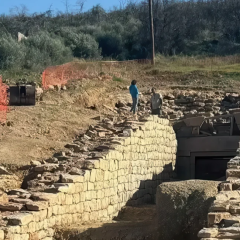
According to НВ — Техно: Archaeologists are intensively excavating the ancient Roman city of Aquinum, situated in central Italy near the modern town of Aquino in the province of Frosinone. Since 2020, extensive digs have revealed a complex subterranean sewer system, ritual inscriptions, a Roman altar, and a treasure trove of over 100 coins. The city spans roughly 250 acres, with about 20 acres unearthed after nearly two decades of study led by the University of Salento.
Since 2020, the firm Roma Sotterranea has partnered with archaeologists to explore Aquinum’s underground infrastructure, focusing especially on its drainage network. Between 2020 and 2023, they documented hundreds of meters of underground pipelines beneath the city’s Central Baths. This network includes:
- sewer shafts
- cisterns
- drainage channels
- inspection shafts
Starting in 2024, investigations began on Aquinum’s theater, which is estimated to have held around 5,000 spectators, highlighting the city's cultural significance during Roman times.
Significant Finds and Their Historical Importance
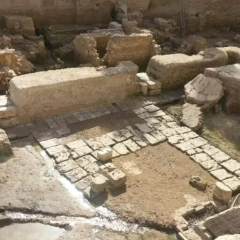
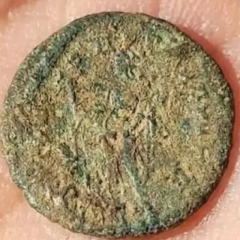
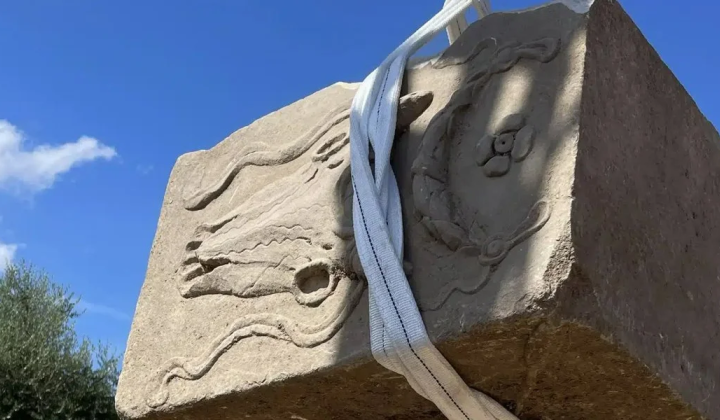
In 2026, archaeologists uncovered the main sewer collector of Aquinum beneath the intersection of Cardo Maximus and Decumanus Maximus. This tunnel measures approximately 1.4 meters wide and over 2 meters high. Alongside this, a hoard of 120 coins, inscriptions, and pottery was discovered. Among the artifacts is a stone kipus depicting an ox, ram, and pig, connected to the suovetaurilia sacrificial rite. This stone was later repurposed as paving at a key city crossroads.
Also found was a marble altar dedicated to the Genius of Augustus, funded by Manius Popidius Anteros, a freedman and member of the Severi Augustales priesthood. A marble slab inscribed with FVL (GVR) C[ONDITVM], meaning "buried lightning," was uncovered-an important religious symbol in Roman belief. In 2026, five marble portrait heads were restored, including a sculpture known as the "Aquinum Caesar." These discoveries shed light on the religious and political life of the city.
Most of Aquinum remains untouched beneath modern farmland, preserving vast archaeological potential. Additionally, in 2026, a princely burial featuring a two-wheeled chariot was found in Sirolo, Ancona province. Dating back to the 6th century BCE, this Piceni necropolis contained a currus, helmet, axe, and other weapons, arranged around a monumental circle reserved for nobility and aristocrats.
Archaeologist Francesco Artibani commented, "The architecture reveals how the theater looked. What we uncover underground could offer invaluable insights into its actual function."
The ongoing research at Aquinum not only enriches our understanding of Roman urban planning and architecture but also offers fresh perspectives on ancient religious customs, daily life, and economic interactions. Artifacts like the marble altar and coin hoard point to Aquinum’s cultural exchanges and commercial ties within the Roman Empire. These findings pave the way for future studies that aim to reconstruct a comprehensive picture of life in this prominent Roman center.
As the excavation of Aquinum continues to reveal its rich history, parallels can be drawn to other significant archaeological discoveries in the region. For instance, the recent unearthing of the Porta Praetoria at the Roman camp of Apulum provides insight into the architectural and cultural intricacies of Roman life. Such findings not only enhance our understanding of urban infrastructure but also illustrate the broader narrative of Roman civilization across Italy.

Read also