Ancient Carthage’s Massive Defensive Wall Unearthed, Harbor Could Hold 220 Ships

Discovery of Carthage’s Ancient Fortification Wall
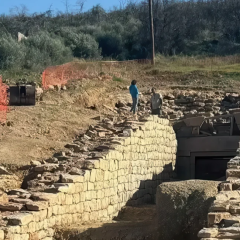
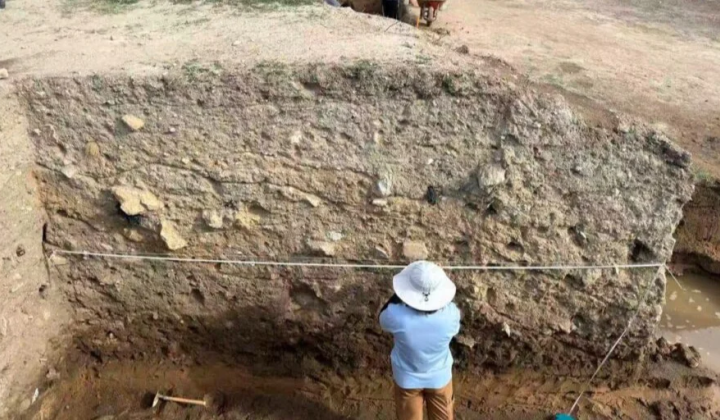
According to НВ — Техно: During excavations in Tunisia that began on October 19, 2026, archaeologists uncovered a defensive wall from ancient Carthage. This project is a collaboration between Tunisia’s National Heritage Institute (INP) and China’s National Archaeology Center (NACA). The artifacts discovered span from the Punic era through the Byzantine period, underscoring Carthage’s longstanding significance as a maritime hub.
Historical Background and Archaeological Finds
Famed for its sophisticated port system, Carthage’s naval harbor was capable of accommodating up to 220 vessels. The outer rectangular harbor served commercial shipping, while the inner circular basin was reserved for the city’s war fleet. This circular harbor was constructed near the end of the 3rd century or the start of the 2nd century BCE. Among the discoveries are large stone blocks believed to have been used as wave breakers.
Throughout its turbulent history, Carthage was conquered and destroyed by the Romans in 146 BCE under Scipio Aemilianus. Julius Caesar later proposed establishing a Roman colony on the site, and Emperor Augustus completed the city's reconstruction by 29 BCE. Under Roman rule, Carthage became the capital of the African province, boasting monumental architecture such as temples, theaters, an amphitheater, and the Antonine baths.
Recent excavations have also revealed two successive temples and a structure thought to be an ancient lighthouse.
Following its time under Roman control, Carthage became the Vandals' kingdom capital. In 533 CE, Byzantine general Belisarius recaptured the city. Additionally, in the Spanish region of Libisosa, artifacts including helmets, swords, daggers, and shields dating to the Roman civil conflict known as the Sertorian War (82–72 BCE) have been found. This war saw Quintus Sertorius declare himself proconsul of Spain.
The ongoing archaeological work continues to deepen our understanding of Carthage’s pivotal role in antiquity. As the ancient historian Appian noted,
“The naval harbor contained facilities for 220 ships, with storage areas above the ship elevators for naval equipment”
.
These findings highlight Carthage’s dual importance as a commercial powerhouse and a military force capable of shaping Mediterranean geopolitics. Continued excavations promise to shed light on the interactions among diverse cultures and civilizations in the region, as well as ancient innovations in maritime infrastructure construction.

Read also