A 5,000-Year-Old Stone Cromlech for Rituals Discovered on Khortytsia Island by Archaeologists


Significant Find on Khortytsia Island
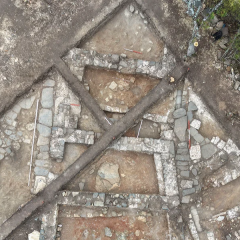
According to НВ — Техно: Archaeologists have uncovered a stone cromlech on Khortytsia Island, dating back nearly 5,000 years, which was used for religious ceremonies. This marks the ninth similar sanctuary identified on the island, the largest in the Dnipro River. Located near Zaporizhzhia and downstream from the Dnipro Hydroelectric Station, Khortytsia is home to over 100 archaeological and historical sites. The expedition responsible for this discovery began just two weeks ago.
The cromlech lies about 50 meters from the Dnipro River’s shoreline. Previously, eight comparable ritual sites had been studied on the island, linked to sun worship, the origins of life, and natural calendar cycles. This newly found structure covers a substantial area and features an unusually flat shape. Historically, these sites were used for religious purposes including offerings and burial rites.
“In ancient times, people constructed these stone arrangements for ritualistic and spiritual functions.”
Anatoliy Volkov
Context and Historical Importance
Early archaeological evidence places human presence on Khortytsia back to the Mesolithic era, spanning roughly 10,000 to 6,000 BCE. It was during this period that people first inhabited the island. Nearby, on Mala Khortytsia (now known as Baida), the first Zaporizhian Sich fortress was built in the 1550s by Dmytro Vyshnevetsky. Anatoliy Volkov emphasized the deliberate craftsmanship of the cromlech, stating, “These were not random stone piles; the rocks were carefully fitted together to form a cohesive stone structure.”
Recognized as one of Ukraine’s Seven Wonders, Khortytsia continues to be a vital site for archaeologists, historians, and enthusiasts of the Zaporizhian Cossack heritage and ancient cultures.
This latest discovery highlights Khortytsia’s role as a key cultural and historical hub in Ukraine. Given the island’s rich archaeological heritage and numerous sanctuaries, this find could provide new insights into the religious customs and social structures of ancient societies that inhabited the region. Studying these monuments offers a deeper understanding not only of local history but also of broader patterns in early human cultural development.
The discovery of ancient structures, such as the recently unearthed cromlech on Khortytsia Island, highlights the rich tapestry of human creativity and spirituality throughout history. Similarly, a fascinating collection of stone turtle carvings found in Turkey, estimated to be around 14,000 years old, sheds light on the artistic expressions of early civilizations. Such finds not only deepen our understanding of ancient rituals but also connect us to the enduring legacy of our ancestors.

Read also