Scientists Propose Existence of Planet X2 Beyond Neptune, Weighing 1.5 to 2 Times Earth’s Mass

Scientific Hypothesis
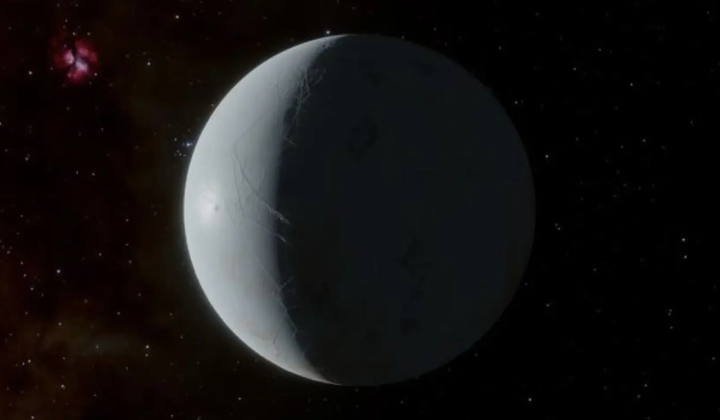
According to НВ — Техно: Astronomers have suggested the presence of a hypothetical planet named X2 orbiting beyond Neptune, with an estimated mass between 1.5 and 2 times that of Earth. This potential discovery could shed light on the unusual orbital patterns observed in distant icy objects within our Solar System. The study, led by Associate Professor Patrick Sophia Likava, was published in the Monthly Notices of the Royal Astronomical Society.
Details About Planet X2
According to the researchers, Planet X2 follows a highly elongated orbit ranging from 350 to 500 astronomical units (AU) from the Sun, with its closest approach (perihelion) no less than 200 AU. For context, Neptune-the farthest confirmed planet in our Solar System-lies at about 30 AU from the Sun, while the Kuiper Belt, home to numerous small celestial bodies, extends roughly between 38 and 50 AU.
By simulating approximately 4.5 billion years of Solar System evolution, scientists gained new insights into the possible gravitational effects of Planet X2 on objects with extreme orbits, such as Sedna, which travels far beyond the main planetary region. This Planet X2 hypothesis differs from the previously suggested Ninth Planet theory, which predicts a more massive celestial body.
"Discovering an additional planet after decades of Solar System research could revolutionize our understanding of its history and the origins of the peculiar orbits of the most distant celestial objects." Patrick Sophia Likava
To test this hypothesis, upcoming observations will be conducted using the Vera C. Rubin Observatory, which is engaged in extensive cosmic surveys. The scientific community eagerly awaits these results, which may either confirm or refute the existence of Planet X2.
The possibility of Planet X2 highlights the critical need for continued exploration and observation of the outer Solar System. Following numerous attempts to identify new bodies in these remote regions, this finding could provide a fresh impetus for understanding the Solar System’s evolution and dynamics. If validated, the discovery would mark a major advancement in astronomy, opening new avenues for studying gravitational influences on objects at the far edges of our star system.
In addition to the intriguing possibility of Planet X2, recent studies of the 70 Ophiuchi AB system reveal a lack of giant planets, yet suggest the potential presence of rocky worlds. This contrast highlights the diverse nature of planetary systems and underscores the ongoing quest to uncover the mysteries of our universe.

Read also