Astronomers Uncover Pattern in Black Hole Masses Suggesting Silent Star Collapse Without Supernova Explosion

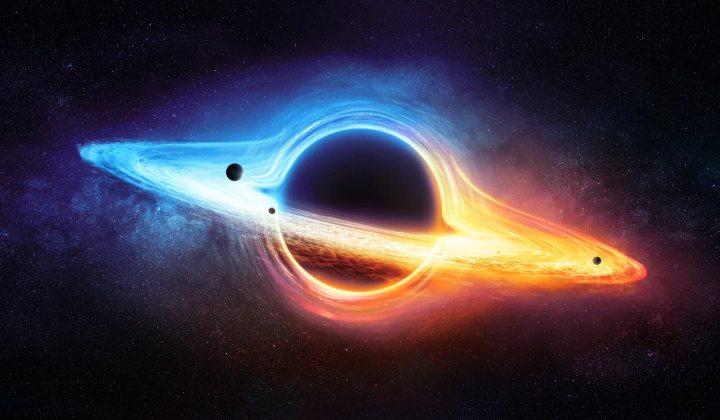
A Unified Pathway Behind Black Hole Formation
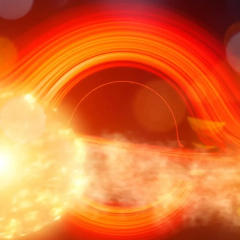
According to НВ — Техно: Researchers from the California Institute of Technology have identified a distinct pattern in the masses of black holes that points to their formation through the quiet collapse of massive stars-bypassing the typical supernova explosion. Analyzing data from 257 black hole mergers observed over the last decade, the team found that about 75% involved black holes weighing around 10 times the mass of our Sun. Notably, there is a surprising scarcity of black holes with masses between 12 and 16 solar masses.
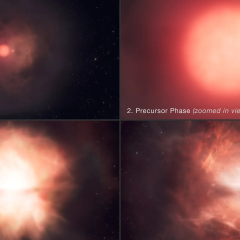
Moreover, black holes near 10 solar masses display spin rates confined to a narrower range compared to other black holes. This suggests a common formation process, likely involving failed supernova events. While massive stars usually end their lives in spectacular explosions that create neutron stars or black holes, some may instead collapse directly into black holes without emitting a bright supernova flash.
Significance of the Findings
Detecting black holes formed without bright explosions poses challenges for traditional observation methods. As researcher Katarina Chatziannu explains:
“The observed pattern may indicate a shared origin for a substantial portion of merging black holes.” - Katarina Chatziannu
Published in ScienceDaily on November 23, this study emphasizes the critical role of gravitational wave observations in revealing the properties and origins of black holes during their mergers.
This breakthrough offers new insights into how black holes form and evolve. Recognizing these mass and spin patterns helps scientists better understand the life cycles of massive stars and their influence on the overall black hole population in the universe. These advancements will be invaluable for future astrophysical research and gravitational wave detection efforts.
These findings align with recent research that also highlights an unusual distribution of black hole masses, suggesting that some stars may undergo collapse without the dramatic supernova event. For a deeper understanding of this phenomenon and its implications for black hole formation, explore more in this related article.

Read also