Mysterious Cosmic Flash Detected by Astronomers—No Gamma Rays Involved

New Insights into the Cosmic Anomaly EP240305a
According to НВ — Техно: On June 24, 2023, a study published in the journal Monthly Notices of the Royal Astronomical Society detailed a newly identified cosmic object designated EP240305a. This object produced two consecutive X-ray bursts, separated by a quiet interval lasting roughly 200 seconds. Using a network of telescopes operating in X-ray, infrared, optical, and radio wavelengths, researchers gathered fresh data on this puzzling phenomenon.
Key Features of EP240305a
The X-ray emissions from EP240305a faded within a few days, while the radio signal persisted for weeks. Meanwhile, no optical counterpart was detected, though a faint infrared afterglow was observed. Importantly, scientists ruled out several possible explanations for the observed behavior, including:
- Thermonuclear explosions on the surfaces of neutron stars,
- Flare activity from magnetars,
- Scenarios involving tidal disruption of stars by black holes,
- Outbursts from binary X-ray systems.
These processes typically decay over months, which does not match the observed timescale.
EP240305a resembles a gamma-ray burst (GRB), yet no gamma radiation was detected. As a result, the event has been classified as gamma-dark, opening up new avenues for further astronomical research. Scientists hope that similar studies will deepen our understanding of cosmic phenomena and their underlying nature.
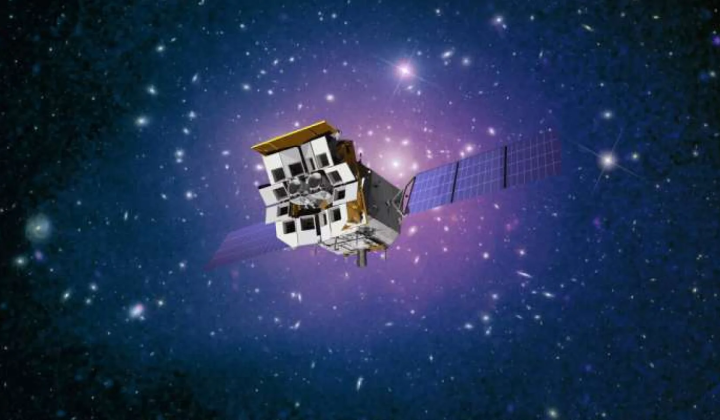
An image from the Einstein Probe (Credit: Chinese Academy of Sciences) underscores the significance of this research and its contribution to the study of the universe.
The investigation of EP240305a highlights the complexity and diversity of cosmic events that continue to challenge science. The detection of this object and its unusual characteristics may lay the groundwork for new theories and models describing stellar evolution and interactions on a universal scale. Such discoveries drive progress in astronomy and could help scientists better understand how cosmic objects form and break down under different conditions.
The recent discovery of EP240305a adds to the growing list of enigmatic cosmic events. In a similar vein, astronomers have also identified flickering remnants of supernovae in galaxy M83, which further illustrates the dynamic nature of our universe. Understanding these phenomena not only enhances our knowledge of stellar evolution but also sheds light on the diverse processes occurring in distant galaxies. For more insights on this intriguing discovery, explore the details about supernova remnants in M83.

Read also