Ukraine's Drone Strikes Cripple 60% of Russia's Oil Export Capacity

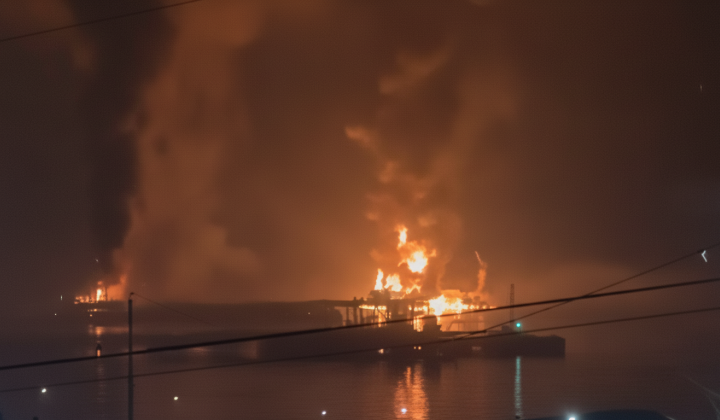
Drone Assault on the Shyesskharis Oil Terminal
According to ХВИЛЯ: In the early hours of April 6, 2026, unmanned drones struck the Shyesskharis oil export terminal in Novorossiysk, Krasnodar Krai, Russia. This attack was part of a sustained campaign lasting from March 22-23 through April 5-6, 2026, which targeted three of Russia's primary oil export hubs. According to official statements from Krasnodar Krai Governor Veniamin Kondratyev, the strikes resulted in eight injuries, damaged six apartment buildings and two private houses, with debris scattered across several industrial sites.
The Shyesskharis terminal, owned by Chernomortransneft JSC, is a critical facility for receiving, storing, and exporting crude oil. Analyst Vladyslav Vlasuk noted that the terminal typically services 35 to 40 large tankers monthly, handling between 3.5 and 4.5 million tons of crude and accounting for up to 20% of Russia's seaborne oil exports. Novorossiysk Mayor Andriy Kravchenko confirmed that one of the damaged apartment buildings was located in the city's Southern district.
Conflict Escalation and Widespread Impact
The two-week offensive saw strikes on oil terminals at the ports of Shyesskharis (Black Sea), Primorsk (Baltic Sea), and Ust-Luga (Baltic Sea). Collectively, these three ports handle approximately 60% of Russia's total seaborne crude oil exports. Military analyst Oleksiy Kopytko observed that defenses at these facilities were breached at least seven times during this period.
Simultaneously, the Kirishinefteorgsintez petrochemical complex in Leningrad Oblast, an oil refinery in Ufa, and a Lukoil facility near Nizhny Novgorod also came under attack. In response to this coordinated assault on its energy infrastructure, the Russian government imposed a comprehensive ban on gasoline exports, effective until July 31, 2026, with exemptions only for intergovernmental agreements. Governor Kondratyev stated that the situation in Novorossiysk represented the most severe incident within this series of attacks.
These strikes on oil loading terminals and other petroleum infrastructure mark a significant escalation in the conflict, posing a direct threat to Russia's vital economic assets. - Veniamin Kondratyev
The export ban on gasoline is likely to exacerbate existing economic pressures within Russia and could destabilize the domestic fuel market. The events in Novorossiysk underscore the vulnerability of critical national infrastructure in an era of asymmetric warfare. These developments highlight the strategic targeting of Russia's energy sector, which remains a cornerstone of its economy and a primary source of state revenue, with potential repercussions for global energy markets.
The recent drone strikes have not only targeted oil export terminals but have also severely impacted critical refining capabilities in Russia. For instance, a significant attack on a key refinery sparked a major fire, highlighting the vulnerability of the nation's energy infrastructure. To understand the broader implications of these assaults on Russia's oil industry, read more about the incident at the Novoufimsk refinery.

Read also