Oxford Mathematician Debunks Myth of Optical Illusions in the Parthenon

Numbers Dispel Myths: Oxford Research Challenges Parthenon's Optical Illusion Theories
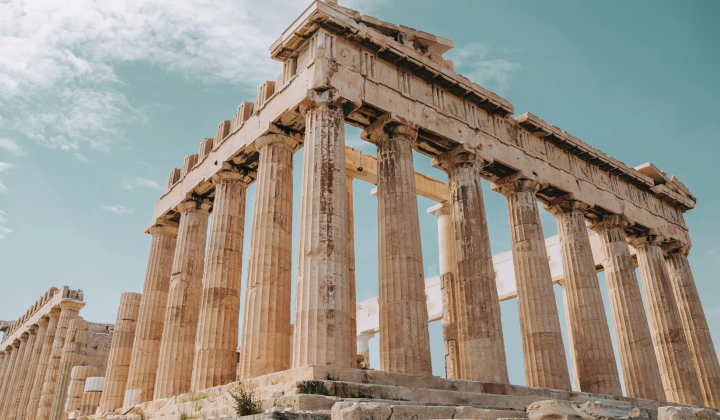
According to НВ — Техно: Alan Goriely, a British mathematician from Oxford University, has overturned the long-held belief that the subtle curves and details of the Parthenon were deliberately designed to correct optical illusions. By examining both detailed 19th-century measurements and modern data, Goriely demonstrated that the idea of architectural optical adjustments is unfounded. Notably, the supposed special protrusion of the columns-thought to prevent the so-called "empty space" effect-was also debunked.
The Parthenon, a renowned temple on the Athenian Acropolis, is celebrated for its architectural precision. The narrative of optical illusions influencing its design traces back to the Roman writer Vitruvius, who lived approximately four centuries after the Parthenon's construction. However, Goriely's findings call this traditional interpretation into question.
Key Findings and Their Impact
Goriely’s investigation revealed that the columns’ projection measures only 18 millimeters-too insignificant to create any noticeable optical effect from most viewing distances. This evidence undermines previous assumptions that the Parthenon’s architects purposefully incorporated optical corrections into its structure.
Published in the journal Royal Society Open Science, Goriely’s study has the potential to reshape our understanding of the architectural choices made in creating this iconic monument.
This research extends beyond the Parthenon itself, offering valuable insight into ancient architectural methods more broadly. It encourages a reevaluation of other historic buildings traditionally thought to employ optical illusions for aesthetic purposes. Consequently, these findings may inspire further scholarly inquiry into the techniques used in classical architecture, deepening our appreciation of ancient engineering and design.

Read also