Arctic Ice Melt Drives 50% Decline in Gray Whale Population

Gray Whale Numbers Cut in Half
According to НВ — Техно: The eastern North Pacific gray whale population has suffered a dramatic decline, dropping by 50% since 2016. A sharp rise in mortality, linked by the National Oceanic and Atmospheric Administration to Arctic changes-especially sea ice loss-is the primary cause. This has disrupted the whales' food supply, leading to a 95% drop in calf births.
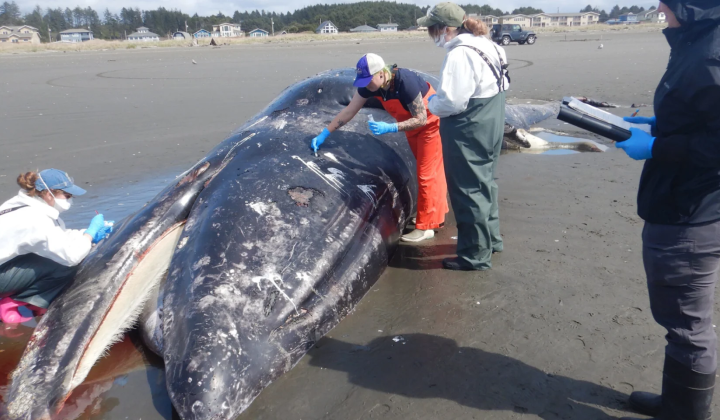
Most gray whales are in poor condition, often appearing emaciated with bones visible and showing scars from ship strikes. John Calambokidis, senior research biologist and co-founder of the Cascadia Research Collective, warns that
“the population is in serious trouble, and this is not part of a normal cycle.”
The collapse has persisted for seven years, and as the scientist notes,
“what’s most alarming is that desperate animals are dying at very high rates and failing to reproduce.”
Migration and Environmental Shifts
Tissue samples were taken from a male gray whale stranded on a beach near Moclips, Washington. In 2016, the population was roughly 27,000 individuals; last year, it had fallen to about 13,000. Gray whales migrate up to 22,000 kilometers round-trip, feeding in the Bering and Chukchi Seas during summer and heading to the coasts of Mexico in winter.
Climate change is accelerating sea ice loss, disrupting the ocean floor's food web. Ice once preserved layers of algae that sank to the bottom, becoming a key food source for small crustaceans. Now, with ice retreating too early, nutrients fail to reach the seafloor in sufficient amounts. As a result, crustaceans are smaller and leaner, providing whales with inadequate energy.
Starving whales lose navigational ability, fail to avoid ships, and struggle to escape fishing nets. Many, instead of heading south, stray into inland waters like Puget Sound. Most of these lost individuals die before reaching Mexico's warm lagoons. U.S. fishery officials are reluctant to discuss climate change's role, as global warming has become a politicized topic.
The gray whale crisis signals deep ecological shifts in oceans due to global warming. Their population decline is a troubling indicator of broader ecosystem disruptions. As key components of the marine environment, gray whales urgently need conservation measures to restore the habitats they depend on for survival.
The plight of marine mammals is not limited to gray whales. Recently, a humpback whale's heroic actions showcased the challenges faced by these creatures amid environmental changes. As climate impacts intensify, understanding the interconnectedness of marine life becomes crucial for preserving their future.

Read also