Black holes older than the Big Bang may explain dark matter

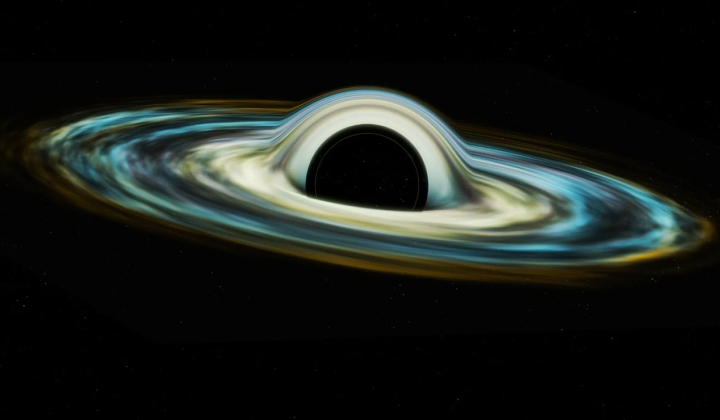
Black holes older than the Big Bang
According to НВ — Техно: On August 11, at 23:30, an international group of scientists from the Institute of Cosmology and Gravity at the University of Portsmouth and the Institute of Space Sciences in Barcelona, led by Professor Enrique Gastanaga, presented a theory suggesting that black holes formed before the Big Bang may exist in the universe as cosmic fossils. This new theory aims to explain the nature of dark matter, which exceeds ordinary matter in mass by about five times.
Alternative model of cosmic rebound
According to the standard model, the universe originated approximately 13.8 billion years ago from an extremely hot and dense state during the Big Bang. However, scientists are considering an alternative model of cosmic rebound. According to this model, the universe initially contracted to a very high but finite density before starting to expand. Mathematical calculations show that compact objects over 90 meters in size can survive a quantum rebound. This discovery may indicate that primordial black holes could explain most or even all of the mass of dark matter.
Scientists also plan to test their theory by searching for relic gravitational waves and analyzing relic radiation. Recently, the James Webb Space Telescope discovered massive objects in the early universe known as small red dots, which could provide important insights into the study of dark matter and black holes. The study, containing DOI 10.1103/pr4p-6m49, opens new perspectives in understanding the cosmos and its mysteries.
This new theory may change our understanding of dark matter and its role in the evolution of the universe.
The detection of primordial black holes that existed before the Big Bang may provide new data about the structure of the universe, as well as the mechanisms of galaxy formation and evolution. As the search for relic gravitational waves continues, scientists hope that further observations will confirm or refute their hypotheses, mark an important step in cosmology.
As researchers delve deeper into the mysteries of the universe, understanding the nature of black holes may reveal crucial insights into dark matter. Recent findings indicate that black holes are less efficient at consuming matter than previously believed, which raises questions about their role in cosmic evolution. For a more detailed exploration of this topic, you can read about how astronomers have reassessed the behavior of these enigmatic entities in our latest article on black holes.

Read also