Ukrainian Researchers Record Inverted Starry Sky and Historic Ozone Hole Over Antarctica

The Extraordinary Antarctic Night Sky
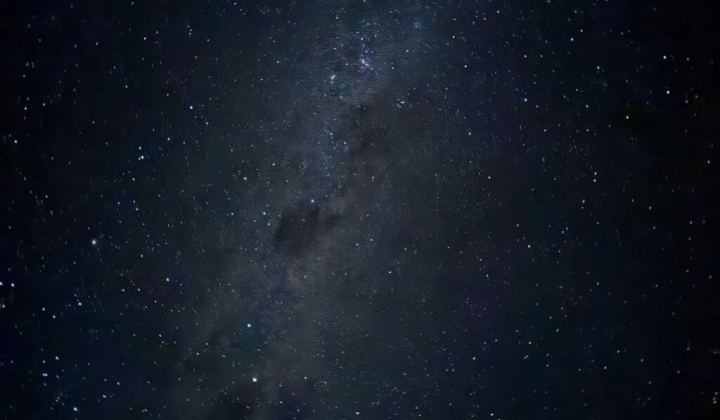
According to Рубрика — Суспільство: At the Ukrainian Antarctic station 'Akademik Vernadsky' on Galindez Island, polar scientists have documented a strikingly unusual starry sky. From the vantage point of the Southern Hemisphere, familiar constellations and the Milky Way appear flipped upside down, offering a rare perspective for stargazing and astronomical observations. Dark patches visible within the Milky Way are actually clouds of interstellar dust that absorb visible light, obscuring the stars behind them. Representatives from the National Antarctic Scientific Center clarified that
“the stars haven’t disappeared; their light is simply blocked by vast clouds of interstellar dust.”
Exploring Cosmic Phenomena
Among these dark features are notable structures such as:
- The Great Rift - a series of dense dust clouds slicing through the bright band of the Milky Way,
- The Coal Sack - a prominent dark nebula situated near the Southern Cross constellation.
The Galactic Center, located towards the Sagittarius constellation, houses a densely packed star cluster known as the bulge. However, interstellar dust hampers direct observation of the Galactic Center in visible light, prompting astronomers to rely on infrared, X-ray, and radio telescopes for detailed study.
Observers from the Southern Hemisphere also have access to unique celestial objects, including Canopus - the second brightest star after Sirius - as well as the Large and Small Magellanic Clouds, which are dwarf satellite galaxies of the Milky Way. These objects cannot be seen from Ukraine, highlighting the exceptional value of Antarctic-based astronomical research.
In addition to these cosmic observations, 2026 saw the Antarctic ozone hole expand to a record 27.1 million square kilometers, marking the largest size in a decade. Despite this, this year’s measurements did not show an unusually low ozone concentration, indicating a positive long-term trend toward ozone layer recovery. Near the 'Akademik Vernadsky' station, scientists also recorded a rare optical phenomenon - iridescence in cirrus clouds, which appears as an irregular, colorful patch resembling a giant soap bubble with shimmering rainbow hues. These findings emphasize the critical role Antarctic research plays in advancing our understanding of both space and atmospheric science.
The Ukrainian polar team’s work at 'Akademik Vernadsky' not only reveals the unique qualities of the Southern Hemisphere’s night sky but also underlines the importance of such studies for the global scientific community. Insights into cosmic structures and atmospheric events like the ozone hole are essential for guiding future research and environmental protection efforts. Thanks to its distinctive geography and climate, Antarctica remains a vital hub for monitoring and deciphering global natural changes.

Read also